If you love hard trail races that have an unreasonable ratio of vert to distance, with tons of rocks and water crossings, and climbs/descents that lack any logical amount of switchbacks, and which would USUALLY be very muddy (just not in the 2024 season), then you’ve already found the PA Trail Dogs and their epic races.
Like a lot of us, I crave a training goal that scares me and horrifies my non-runner friends. Struggling to train for ultras due to my cranky knees, I went with more races at a shorter distance. I’ve run a number of Rocksylvania races, so I was familiar with the trail series and its scoring, and intrigued by the idea of trying to complete the full slate at a sub-ultra distance. The races vary from 4 miles to 50K, and there are 5 divisions, 4 of them shorter than ultra distance. April Zimmerman advised me that while ALL of the races are beautiful and hard, the 25Ks are possibly the best sampling of Rocksylvania running. There are 8 races in the 25K Granite Division. Here’s a link to the Trail Series page: https://www.patraildogs.com/rocksylvaniaseries
Race #1: Hyner Trail Challenge
The first race in the series was the Hyner Challenge in April. I had run the 50K twice, and this was my second go at the 25K. It is a huge event with 1,000 runners in the 25 and another 400 in the 50, so unlike the rest of the series, it’s very crowded for a lot of the run. I knew I hadn’t trained on hills enough, but I felt sure I could finish, and once school was over (forever since I was retiring), I’d be able to train properly. Ha! The climbs at Hyner are outrageous and the views breathtaking. There’s a wonderful sense of community in running a race with so many participants, which we don’t get so much in trail running. The race starts and ends with about a mile of road to thin the pack. Then there’s a huge climb to Hyner View lookout over the Susquehanna, followed by 2 more monster climbs including the infamous SOB hill for a total of about 4,500 feet of vert, and some tricky descents.
The after-party is a joyful celebration of our sport! ALL of these races have great after-parties, but of course the others are smaller. The weather was unusually nice for April, so lots of people hung out for hours after finishing. Hey, I love running ultras, but there is no denying how very much more fun the after party is when you get there much sooner and without having completely depleted your reserves!
Race #2: Slate Run
Slate Run, in early June, is one of the hardest but also most beautiful of the series. I had signed up twice before, but circumstances had prevented me from toeing the line. I had run the course with Joanne Van Horn and Pete Groth in the past, so I knew what to expect. This was the only race that I went up and back day-of, because of an overcrowded family schedule. That was doable since my husband, Alan, drove, but not ideal. And that’s one of the big challenges in racing these series: it’s most comfortable to spend 2 nights in the area, so time and cost can be factors.
Slate Run has a half-marathon and a 25K, all starting together. You begin and end with about 2 miles of rail trail. All the rest is pretty challenging single track! Like most of the races, it was longer than 25K–a free bonus of 1.5 miles. (According to my GPS, the races in the series varied from just under 15 miles to 18 miles.) There are 2 massive climbs, totaling almost 3,000 feet of vert, and the downs are treacherous. The wildflowers were beautiful, and many runners saw a timber rattlesnake on course, but sadly I missed it! This was the first race I ran with poles, in hopes of giving a little relief to my knees on the descents. I was glad to have them, but after this race, I bought a quiver and kept my poles put away until the pack thinned out a couple hours in. No one likes poles waving around when runners are bunched! My apologies to those near me early on in this race. Another fun after-party, and Pine Creek right there for a post-race cold plunge.
Race #3: Sharp Top
I heard a rumor that this race at the end of June will be discontinued for next season, so I’m glad I got to run it. They had a 50K also (I was truly relieved to make the turn to 25K at the split!) There is a primitive campground at the start/finish, but we had a graduation party in NJ right after the race, so we stayed in Williamsport Friday night rather than bringing the camper.
The worst thing about this one was the parking. We have an SUV, but had driven our sedan to the race. The last couple miles to get there were gravel and the parking was just a field which mostly wasn’t mowed. It was rainy, too, so everything was muddy and rutted. I know Alan expected to need a tow to leave (we didn’t). The race was pretty runnable, and “only” 2,600 feet in about 18 miles–and I missed a flag and ran some extra (my fault, markings were good). I had my poles, but never got them out. Lots of Jeep-road type stuff and nice single-track, not especially rocky. I had one hard fall early on, probably because it was warm and misty/rainy, so my glasses were constantly fogged up. Speaking of fog, the big overlook was completely socked in, so no vista (see photo below), but the misty woods were spookily gorgeous. This race had especially good food and beer afterward, and in spite of the rain and mud the atmosphere was friendly and festive. If it is not discontinued, I would go back, but in the SUV!
Race #4: Cook Forest
Cook Forest in mid-August has only the 25K distance. It is the farthest drive, so we camped for four nights in the modern campground at the state park, where the race is held. We’ve been to this park several times now, and it was my second time running the race. We both thought the area has really improved as a tourist destination in terms of restaurants, breweries, and a rail trail nearby. Cook Forest is famous for old growth trees, AND it has lots of mushrooms, so: my kinda place! The race has a beautiful course, very smooth trails for Rocksylvania, and the least vert (2,200 feet in 17.5 miles) of the series. The only negative is a couple of miles of actual road in the middle, but that gave Alan an easy spectator spot.
There were lots of yellow jackets this year. I didn’t get stung, but several runners around me did, and I ran scared of them for a lot of the race. I’ve seen at least one trail race canceled because of them this summer! It was super humid, but the course winds through old growth trees, follows creeks and the Clarion River, and climbs to the famous fire tower. It is one of my favorite trail races ever. We had a really fun camping trip too, full of gravel riding and hiking and breweries, as the rest of the teachers and students went back to school.
Race #5: Boulder Beast
Boulder Beast in mid-September also has a 25-mile distance, which I did some years ago and loved, but this year I was happy to turn toward 25K at the split. Almost 3 miles of road at the start and finish in Lock Haven, so you’d think with only 10 miles of trail it would be fairly quick…but the boulder field mile took me 49 minutes, so, no!
3,100 feet of vert, 3 main climbs, all hard. The boulder field is intense! I love this race once it’s over, but I’m actually kind of scared on the boulders. They go on for a VERY long time, and it’s crazy steep. After that, normal Rocksylvania stuff until the road. Very beautiful course. The after-party is great, and there are hot showers! It was great to truly clean up before relaxing with tasty food and beer. This is probably one of the best ones for camping, conveniently located right at the start/finish.
Race #6: Green Monster
The Green Monster in mid-October has three distances: 15K, 25K, or 50K. The RD writes hilarious email updates and FB posts, which are a hoot. It’s in the cute town of Wellsboro, so we camped nearby for 3 nights. The race has on-site dry camping, but no amenities, and it rained. I know, right? During a truly historic summer drought, almost all my 25Ks were wet, and THIS baby was a true soaker! Some utter badass spent the night in a sleeping bag on the ground with just a tarp folded over top, and it was a monsoon! Anyway, 3,700 feet of vert, 5 major climbs, and finishing with a scary downhill called Frankenstein’s Forehead. I was dreading this the WHOLE TIME because I remembered it from running the 50K 5 years earlier, and being terrified back then on a completely dry day. The course is just beautiful: lots of running along creeks and sweet singletrack. On this day, it was very muddy and slippery–drenched from the start.
Finally, I was approaching Frankenstein’s Forehead. The rain had picked up. It was hard to see with my glasses. As I neared the last AS, it began to thunder and lightning in earnest. I expected to be held, and I knew I’d be frozen if I wasn’t moving, but also NO WAY would they send us down the Forehead in this weather! Just as I got there, a volunteer arrived in a jeep with beer for the AS workers, filling them with joy and distracting them from closing the course. Or maybe they never intended to! I don’t know. I rolled right through there with a couple of other runners in the 15K, and down we went! After a few minutes, we were all just whooping and sliding. Lightning crashed over and over and the rain was pouring down. Before I knew it, I was at the bottom–much less scary than I remembered. I gotta stop dwelling on my fears and just run through them! The rest of the way was largely under a couple of inches of water on a beautiful trail following a creek. Extra good swag for this one and super food and beer.
Race #7: Call of the Wilds
Wilds was only a week after Green Monster, in late October: the 2 hardest courses, back-to-back. It has a 50K as well, which I’ve run twice (my 2 slowest ever 50Ks). The 50K starts in the dark, so I was grateful to begin in sunlight. It was the first cold start of the season for me, but it turned into a hot and perfect fall day. 4,600 feet of vert, 3 huge climbs, stunning fall color, crazy rock formations, and vistas and vistas and vistas.
The most nuts climb is called Torbert. Ugh. Glad when THAT’S over! Fun after-party, and I finally met Nancy, the woman I’d been challenging for the lead in our age group. I was ahead only because she’d missed one race, but she was gaining hard with one race to go. Sadly, she rolled her ankle badly at Wilds, and couldn’t run the final race.
Race #8: The View
The View, in early November, also has a 15K, and it is very similar to Hyner. By this point, I was toast. The Rocksylvania season is concentrated in the fall, and I’d also coached cross-country for the first time and taken a few other trips, and I was just plain tired. No injuries, just that little whisper your tendons give you when you’re not in your 20s anymore and in fact you’re barely still in your 50s, but you’ve been trying to do epic shit anyway.
Thank goodness this was the shortest one–I got under 15 miles–but there was still 3,600 feet of vert and a hefty dose of rocks. You start and finish with about a mile of road, and honestly I knew in that first mile I was in for a suffer-fest. I got cocky and didn’t give my body the rest it needed in the weeks before the race. So I had a long slow day on those trails and tried to savor the views and the trail camaraderie and enjoy a final epic trail race. The climb to the View at Hyner (first photo), SOB (below), the endless jeep road on the ridge, done. Mission accomplished! Great after-party and a very satisfying feeling of accomplishment!
Rocksylvania Trail Series Awards Party
The season wraps up with an awards party at New Trail Brewing in Williamsport for the top 3 finishers in each age group in each division. Here’s another event I don’t think I could have managed if I hadn’t retired, but wow it was fun! I had the absolute pleasure to meet several other runners during the series, and it was very nice to sit with them for a few hours when we weren’t sweaty and exhausted.
The swag was super, and plenty of pizza and beer. I set out to try to earn the coveted Rocksylvania jacket, but there were lots of other goodies in the swag. Trail Dogs do it right! I can’t say enough about this series, IF you want to run super hard, crazy vert, gorgeous trails!
A few tips if you want to check out the Rocksylvania Trail Series:
Some of the races fill fast (especially Hyner, which opens almost a year ahead and fills right away!)
If you are bringing spectators, generally they can partake in the food, too, if they make a donation, or, in some cases, purchase a meal ticket in advance. Check to be sure, though, because usually other food options are not very close, and a hangry crew spoils your post race glow!
Many of the races offer free or cheap dry camping nearby.
Around 9am Saturday, Brandon parked his car in a nearby development, and we walked approximately .75 miles to the start of the Historic Brandywine Trail. Neither of us had run any of this previously, but we knew we were looking for white blazes. The beginning part of the trail was well marked and we got through the first few miles with very little trouble.
Our spouses (shout out to Katie and Mark!) generously agreed to crew for us, and they first met us around mile 11 with water and more food. The beginning portion of this route was predominately road, and, while Brandon and I prefer more trail, it was relatively easy to navigate. We did second-guess ourselves a few times, but we didn’t have any major issues until we got to a section of trail with a sign indicating the trail was permanently closed; we followed another trail that closely paralleled the original and did not have to deviate very far.
Shortly thereafter, we met our spouses at another “aid station” around mile 18 and continued on our way. Again, following white blazes at this point was easy, although around mile 20 we noticed that there was a slight discrepancy between the blazes and what was shown in the .gpx file. Another slight re-route occurred about 2 miles later, when we got to another section that was posted as “Closed from October-January due to deer season.” We were able to skirt around the section by following the road and linking back up with the original trail maybe half a mile later.
We came to our third “aid station” at the Pocopson Post Office/Ace Hardware/Veterinarian around mile 25, grabbed some more water and food and were on our way. This section proved to be the most difficult in terms of navigation and terrain. Around mile 30 we came to a part of trail that should have been an easy crossing of the Brandywine Creek by way of a bridge; however, the bridge was under construction, aka non-existent. We spent several minutes trying to find a good spot to cross the creek; fortunately we found a spot that wasn’t very deep, but we did have to backtrack a bit in order to do so.
After the bridge debacle, we continued on, and once again the route was a balance of pavement, gravel road, and single track, but the blazes were placed much more sporadically, and the trail was not well maintained. This led to a lot of time spent consulting the .gpx of the route, bushwhacking, and second guessing whether or not we really were in the right spot. Around mile 32 we encountered our biggest navigational error of the day, when we missed a faded blaze that indicated we should have turned right. We ran along a gravel road for about half a mile before realizing our blunder and needing to backtrack. At some point we crossed into Delaware, although there was no line indicating that (or fanfare) as I had hoped.
Eventually we found Katie and Mark at our fourth and final aid station around mile 32. At this point, we knew we were only a few miles from the end and it was getting dark, so we grabbed the bare necessities and kept moving.
We hammered as best as one can after 35+ miles and eventually found ourselves in Brandywine Creek State Park around sunset. We were happy with our efforts but after 38.5 ish miles we were also really happy to meet Katie and Mark at the car and call it a day.
So, I ran a super cool race in Europe back in June.
The TLDR version is that I rain the Grainau Trail Race, which is part of the Salomon Zugspitz Ultratrail – Germany’s largest trail running event. This distance is just under 10 miles with about 2,500 ft elevation. If you get the chance, definitely check it out!
If you’ve got a bit more time, let me take you on a little adventure!
Earlier this year, I found out I’d be jetting off to Germany for work in June. Naturally, I thought, “Why not turn this work trip into an epic personal getaway?” So, I went into full “travel-planner mode.” The big questions were: Where to go? Why? And for how long?
My solution, of course, was to start Googling! I started searching for concerts and trail races in Europe. While the concert scene didn’t have anything that piqued my interest, the trail races were overflowing. After sifting through a ton of great options in a ton of cool places, I stumbled upon something truly exciting: the Salomon Zugspitz Ultratrail.
Picture this: Nearly 4,000 runners from 67 countries and 46 exhibitors coming together for an event featuring six distance options, a professional livestream, and a vibrant festival atmosphere spread over three exciting days. Here’s the lineup:
Grainau Trail: 9.94 miles | 2,493 ft elevation | Saturday 12 PM
Garmisch-Partenkirchen Trail: 18.02 miles | 4,725 ft elevation | Friday 10 AM
Mittenwald Trail: 27.34 miles | 6,102 ft elevation | Saturday 7 AM
Leutasch Trail: 42.28 miles | 9,409 ft elevation | Saturday 9 AM
Ehrwald Trail: 53.43 miles | 13,349 ft elevation | Friday 11 PM
Ultratrail: 65.90 miles | 16,663 ft elevation | Friday 10:15 PM
It’s a trail runner’s dream, amiright?! And the timing was perfect! Still feeling a bit bruised from an Oil Creek DNF last fall and a not-so-stellar first half of 2024 with minimal running, I wasn’t exactly oozing confidence. I decided to play it safe and signed up for the beginner-friendly Grainau Trail. With that commitment in place, I built the rest of my trip.
I finalized my itinerary, and it was pretty awesome: a couple of days in Belgium with co-workers, followed by a few days in Germany for work and the race, and then a 7 a.m. flight to Poland for some solo exploration before heading home.
But, plot twist! If you follow me on Strava, you know my plans hit a snag. Two days before my departure, our work trip was canceled. Cue the panic and scramble! Now, what’s a runner to do when their well-laid plans go awry? Adapt, keep moving, and make it work to get the finish. And that’s what I did.
Within hours, I rebooked my flight, this time flying into Poland with absolutely no plan other than meeting up with a co-worker on Sunday and making it to Germany by Friday, the night before the race. As per usual, I found myself thinking: “It’ll all work out,” a phrase my brother (PPAC President Steve Vida) often says as a sincere reassurance. However, sometimes it is accompanied by a knowing laugh, which suggests a hidden subtext: things might not actually work out, but roll with it anyway, hold on tight, and hope for the best. This was one of those times. Sure, this motto might bite me in the ass someday, but for now, it’s still going strong because everything really did work out!
After road-tripping through Poland, Slovakia, Austria, and Germany, we arrived in Farchant, a small village in Bavaria, late Friday afternoon. We checked into the hotel and took the short train ride to the race expo in Garmisch-Partenkirchen. I grabbed my bib, checked out the vendors, got my first official pre-race photo, and soaked up the energy and excitement of the event. Since some of the races had already started, the town was lively and buzzing, especially near the finish line. It was time to find some food and get back to the hotel to get everything situated.
Race day:
With a later start time, I avoided the dreaded early morning wake up and rush to the start line. Instead, I relaxed on the balcony taking in the amazing (and slightly intimidating) mountain view before grabbing breakfast and catching the train into town. Once there, I walked a short distance to Olympia-Kunsteisstadion, a skating stadium built for the 1936 Winter Olympics, to board the shuttle bus to Grainau, where my race began.
At noon sharp, the race started – German punctuality at its finest! For the first few minutes, my mind was filled with all the typical thoughts. For me, these are: “Why am I doing this? I don’t belong here,” “Am I going to make the cutoff?” and “What if I don’t finish?” But soon, these thoughts faded as I settled into race mode. They were instead replaced with the sound of spectators lining the streets to cheer on runners as we winded through the town and into the trails. The cheering was replaced by the sound of roaring cowbells–on actual cows–as we ran through the herd. This happened randomly throughout the race, and it was fun to see and hear them as they roamed alongside (and sometimes on) the trail.
“Keep moooving, Michelle!”
The scenery was breathtaking and the views of the towns from atop the mountain were stunning. The climbs, though challenging, didn’t feel as difficult as I anticipated.
I reached the highest point of elevation right around the 5-mile mark – greeted by cows again 😊. Before I knew it, I was at the aid station with only 3 miles of mostly descent left until the finish. After a quick Coke and a smile, I continued. The overcast skies hinted at rain, which also pushed me to wrap this up.
After descending the mountain, the race finished with a brief jaunt through the town, leading into the home stretch and across the finish line. As I finished, I heard the announcer say, “Michelle Henry of the United States and a Pagoda Pacers Athlete” – the highlight of my day!
Afterwards, I changed into fresh clothes and grabbed some post-race food and hit the road again – this time off to Prague! Perfect timing, as the sky opened up and it poured almost as soon as I closed my car door.
Final thoughts:
This race was top-notch with excellent communication and organization. I’d love to go back and tackle one of the longer distances.
Next year’s dates are June 12-14th and there’s already a big announcement for 2025: the debut of the ZUT100, the first major 100-mile trail running race around Germany’s highest mountain. Registration opens in November.
So many people told me that the Comrades Marathon in South Africa is their favorite race–that it is life-changing. I wanted to see why!
It was created in 1921 to honor fallen soldiers in WWI and is the world’s largest and oldest ultra. We spent a few days in Cape Town to get use to the time zone. There were great restaurants at the Waterfront. We took a bus tour to the Cape of Good Hope and to Boulders Beach to see the penguins.
Then we flew to Durban and met up with Marathon Tours. They made everything so easy! It was nice to meet runners from all over the world. Marathon Tours took us on a bus preview of the course on the day before the race, with Patrick Boyd, who I think has run it 14 times. He and Coach Markus gave excellent advice: be patient and slow early on; don’t trip on the reflective lane markers; and drink at each aid station. I felt anxious and out of my league, so one of the tour guides, Coach Markus, made me a pace chart, which freaked me out until I realized it was in kilometers.
I didn’t sleep well and felt terrible when I woke up. Garmin said my body battery was 5% charged. I didn’t know how I was going to run. There were 22,500 runners and only 200 portapotties at the start, so don’t show up with a full bladder. We had to be in our corral 15 minutes before the start, or we had to start after all the corrals. You have 12 hours to finish the race. The clock starts when the first runner crosses the start line, so if you start after everyone else, you can lose 20 minutes.
The race started at 5:30 a.m. with the South African national anthem, then Shosholoza (a song originally sung by gold and diamond miners), the theme from Chariots of Fire, a rooster crow, then the cannon. Unlike in the US, everyone sang, and in different parts! The energy was incredible!
The race direction alternates, going “up” (from Durban to Pietermaritzburg) one year, and “down” (the opposite) the next year. This was an “up” year, and, because of road construction, an unusually “short” distance at 85.914 km (53.4 miles). It was really crowded for the first several miles, and I focused on not tripping. The climbs weren’t bad, compared to Tuesday Hill Repeats. (Thank you, Jim Blandford)!
I had to use the portapotty 3 times. I waited in line the first 2 times, so I kept getting stuck behind the 11 hour bus (pace group), which was huge. It was so crowded! After a while, I managed to extract myself and get ahead of them, but then I got stuck behind another group, which was going slower than the 11 hour bus. The bus ran me over and I was trapped again. By the way, I am very grateful that I wore my hydration vest and carried toilet paper and hand sanitizer!
I was so happy to see my friend, Cathy Hopkins. This was her 11th Comrades!
There were lots of kids to high five. However, 2 children, maybe 3-4 years old, stepped onto the course. I couldn’t stop fast enough and tripped over the little boy, knocking him over. I felt so bad. I kept asking whether he was okay, but he just looked at me. He got up and left, so I think he was fine. Luckily, I landed on my sachet of water, busting it open, so I used it to clean my wounds. Water is given in sealed plastic bags, not cups. They were easy to carry and always cold.
The crowd support was amazing! People played music, sang, danced, cheered, and offered food. I ate bananas, oranges, salted potatoes, potato chips, cookies, energy bars, and a sandwich with something like marmite, although the woman offering it called it something else. (I was very grateful for this–and for the fig bar I carried–because the aid stations did NOT have a lot of food options.) The other runners were kind and friendly. It was very cool to be midpack and see the huge pack of people of all different ages, sizes, shapes, and nationalities moving towards the same goal.
I pulled out my phone and saw the app was predicting that I would finish in 11:03. I overheard someone say that if we finished under 11 hours, we would get a bronze medal. There was no way I could go any faster, and I still had to climb the last 2 hills (Little Pollys and Polly Shorts), so I gave up hope. (I am Gen X. It sounds like Pauly Shore to me, too). However, there was some gentle downhill. I looked at the tracker a little later, and my predicted finishing time was around 10:50. Then I started drinking Coke and running. I drank more Coke than I did in the past 20 years combined. The course kind of makes you run a negative split, but I’m so proud that my last mile was the fastest! I finished in 10:46:03, which I am really happy with, considering that I didn’t think I would finish before the 12 hour cut off.
The finish was as crowded as the Eagles Super Bowl parade. Marathon Tours arranged a hotel room for me to shower in before the long drive back to Durban. Use the bathroom before the drive back to the start! There is a lot of traffic.
The next day, we were invited to Bruce Fordyce‘s party. Bruce is a 9-time winner of Comrades. Even if you weren’t into running at all, you would love Bruce’s stories. They were inspiring and very funny. Gerda Steyn was there. She is a 3-time Comrades winner and such a sweetie. One of the runners in the tour group was Kieran Alger, from the YouTube channel, Manvmiles. His video explains things much better than I can.
We did the extension to Thanda Safari afterwards and it was wonderful! Thanda is owned by Christin and Dan Olofsson. They do a lot for conservation of endangered species and employ a lot of local Zulus. I highly recommend it.
I started my build up for this race the week of Thanksgiving, 2023. I built up coming off the Harrisburg Marathon with weeks of 20, 30, and 40 miles before I started adding 10% each week. I decided to run Jack Daniels 2Q program, as I liked the flexibility of the workouts, which fit in great with my family’s hectic schedule (we now have 2 girls under 2 years-old, and I just started nursing school while working 30 hours / week). At the end of January, I was experiencing some lower tibial pain. I decided to stop running entirely for a week after coming off my then highest volume week ever of 57 miles. This ended up being a great decision. I scaled back up pretty quickly and didn’t miss any other 2Q workouts, and the pain never flared up. I think running on the road/snow in trail shoes after a snowstorm caused it.
I averaged 50-60 miles for the majority of the block which was about 15-20 miles more per week than my Fall buildup.
I had two key workouts that really gave me confidence going into the race. The first was a repeat of a route that I did in my fall prep except I went from 20 miles at a 8:40 pace to 22 miles at a 7:39 pace, including a 6:45 last mile where I pushed because I felt like I had gas in the tank. The second was my last long run before tapering. This was a 19 miler that featured 1350 feet of vertical gain which is substantially more than the entirety of the Pittsburgh Marathon course. Average pace was 8:05, which was a bit slower than I wanted, but the elevation was brutal. At the time, I honestly thought to myself that I am an idiot and I should’ve picked a flatter route because this didn’t really give me confidence going into the taper.
Pre-Race
I said this in last year’s report for Pittsburgh, and it bears repeating: 10/10 organization and race experience. Plenty of bathrooms, quick and easy gear check, easy access to corrals, such a relaxed pre-race experience. The only stressful part of this morning was coordinating a photo with a group of other local runners for a pre-race picture. Ironically, I was the one who suggested the meeting area, and I was the only one who went to the wrong spot.
Race
Race strategy coming into the race was to run at a 7:15 pace and shoot for a final time of 3:10, with as close to even splits as possible.
Miles 1-11
One of my favorite things about the half and full in Pittsburgh is that they set off fireworks right after the gun start and after the start of each subsequent corral. My wife ran the half and this was a major selling point to her. I love how the excitement isn’t reserved for just the first corral. The first 11 miles vary between flat and rolling as you go up and down a few bridges. During this period I clocked miles between 7:07 and 7:15. For all of training and race day, I went with Tailwind powder for my nutrition. I absolutely LOVE it. I was concerned that carrying 2-750 ml soft flasks in my flip belt with 3 scoops (scoop has 25 carbs) would be annoying and cumbersome, but throughout training I found it wasn’t that annoying and I felt super well fueled and hydrated throughout my training runs. I took roughly 1/3 of the flasks every 3.5 miles.
Miles 12-14
The part that everyone talks about and fears in Pittsburgh is Birmingham Bridge and Forbes Ave. Last year I picked a hill nearby that simulated the Birmingham Bridge and strategically placed it at the end of my long runs. This year I went a step further and had hilly routes for 90% of both my easy runs and my 2Q workouts. This paid off BIG. Going into the race I told myself to not burn my candle out in this stretch and be ok with 8min or 8:15min miles. I ended up running 7:26, 7:31, and 7:16 for miles 12,13, and 14 which featured 41,102, and 43 feet of vertical gain. I did moderate the effort on the inclines, but I think this was a spot where the carb loading paid off from a power production standpoint. I also think my final key workout that I deemed “too hilly” paid off. I was feeling really good here. There was a small group of people midway up Forbes Avenue, and I turned to them, made a “eating-with-a-spoon” gesture, and said, “I eat hills for breakfast!”
Miles 15-19
This part of the course was a little bit quieter, but I enjoyed running through parts of the city that I hadn’t previously experienced. At about this time, I started to notice that there was a particular spectator who was showing up solo at various points of the race with a small sauté pan and wooden spoon to cheer people on. I didn’t see any bicycle, so I’m not sure how he was getting from point to point so quickly. My times for these miles ranged between 7:07 and 7:28.
Mile 20
Mile 20 features the highest point on the course–the last substantial incline–after which is a steady decline to the finish. It was around this point that I was starting to feel the effort become more difficult. I had music on the entire race, and I paused it for about 20 seconds. I had forgotten that someone I run with weekly was coincidentally going to be in Pittsburgh visiting a friend. Luckily my music was off because I heard him say my name and cheer me on and that gave me quite a boost when I needed it most. Clocked my slowest mile here (7:39). The “Pan Man” showed up 2 more times in this stretch.
Miles 21-26 (Race #2)
The mental boost from my buddy really helped me reset, and I realized that I actually felt pretty good for being 20+ miles into a marathon. At this point, the wall hits a lot of people, but I never ran into that issue. Shoutout yet again to Featherstone Nutrition on IG. I followed her carb loading calculator as always and I am now 3-for-3 on not bonking nor really hitting a wall in my marathons. The “Pan Man” made another appearance and I said to him, “ You are f****** everywhere!” His last appearance was around mile 25, and he seemed to be with a group of friends at this point, so this time I said, “Hot damn–it’s the man with the pan!” They thought it was funny; I thought it was funny; my wife when I told her did not think it was funny.
I was clocking miles at 7:15 or better at this point. I was slowly running people down, one-by-one, as I was surging at a time when others struggled. This was a mental boost for me, and I ground out my fastest mile at mile 24 (6:57), which had a major elevation drop of -175ft. Mile 25 took 7:21, and Mile 26 was 7:08.
The Finish 26-26.4
I unfortunately did not run a perfect course (who ever does lol) so my finish was .4 miles according to my watch. I clocked a 6:07 pace with a top pace of 5:16. The finishing stretch was super crowded as the half and full marathon course came back together. I had to weave a bit but finished strong and on my feet. I crossed the line with an official time of 3:10:52, which was almost exactly a 10 min PR from the nearly pancake-flat Harrisburg Marathon.
Post- Race
The finish line feeling is what I train for. The feeling of all the hard work paying off. All of the many early morning runs in the dark, the below freezing temperatures (including some in single digits) and lifting 3x a week with a heavy leg day weekly. I steadily climbed from 238th place to 181st by the finish, jumping 25 places in the last 10k. I was patient and executed my plan to perfection, all while having the most fun throughout the race that I’ve ever had.
I am constantly driven by me desire to find my true potential because I have already surpassed what I thought my potential was when I started my running journey less than two years ago in August of 2022. Next up for me is the Philly Marathon this November, where the goal is to BQ (sub 3 hrs). Realistically, this won’t actually qualify me a spot in Boston 2026 because of even faster cutoff times.
Pittsburgh has been an absolute joy to run in, so maybe in 2025 I’ll run it again and truly punch my ticket to Boston?
The Strolling Jim 40-miler is a long-standing classic road ultra that has been around since 1979, created by the iconic race director Lazarus Lake (aka Gary Cantrell). I have been on a quest to do as many of these old ultras as possible before I get too old, or they go away completely. To date I have done JFK 50, Laurel Highlands 70.5, and now Strolling Jim. Before I get into the race itself, let me tell you that it is a LONG drive down to Wartrace, TN, which is buried deep in the state and not so far from Alabama. On the way down, I split it up into 2 legs, stopping in West Virginia where one of my sons lives. The way back, however, was a 13.5 hour straight shot, and after a race the day before, it wasn’t fun, and I wouldn’t recommend it. The states I visited on my trip were PA, MD, WV, OH, KY, TN, and VA.
Now for the race: This is a road ultra, and although I am a veteran of trail ultras and a few road marathons, I had never done something quite like this, and thus I was a fish out of water. Figuring out an acceptable pace was the hard part. The course is a bit rolling, and boasts around 2800′ of elevation, so it’s not flat by any means. It covers backroads, mostly, but it does have one major highway crossing that is manned by Tennessee state troopers to keep everyone safe.
The aid stations are very basic with an electrolyte drink, water, soda, cookies, and chips. No “real food,” but the volunteers are all youth from the local high school, and the race benefits their athletic programs. Also, many people had crews following them on the course, who generously offered other runners ice and water. Some neighbors even had ice pops, water, and other goodies at makeshift aid stations.
The weather forecast was supposed to be mid 70’s, cloudy and slightly humid with a chance of rain later. What we really got was low 80’s, full sun, with high humidity. Thanks, Weather.com! I started off fine, clicking off consistent mid 9-minute miles for roughly 27-28 miles, but then the heat took its toll and I slowed a bit. At mile 29, I hit a section called “The Walls”, which is a pretty substantial climb that lasts about 2 miles. I threw my trail ultra mindset on, and power hiked this for the most part to the top, hoping to have legs left to run once I got there. Sadly, I spent the next 10 miles to the finish alternating run / walk, and just hoping to survive.
I ended up with a 44th place finish out of 151 finishers at 7:16:56. I was hoping to be around 6:30, and if you go under 7 hours, you get a special red shirt that says, “sub-7 finisher”. Oh well, maybe next time…or…umm..probably not. This is likely a once-and-done race for me!
A few fun facts about this race, some of which came in a nice booklet given to all participants:
1) I was only the 21st person from PA to ever race this.
2) Charlie Trayer (retired ultra runner from Berks) still has the 6th best Strolling Jim finish at 4:15:21 from 1989!
3) I did not get to meet Laz, as he is currently walking across the USA.
Immediately following the 2023 Pittsburgh Half Marathon, I transitioned into fat loss (156lbs to 145lbs) in order to compete in a bodybuilding show at the end of June. During this time, I was walking a lot but only running 1-2x a week for 5 miles. Immediately following that event, I did a 5-week prep period for a powerlifting meet in July. Also during July, I participated in the summer version of GRIT which helped me have volume pr for the month of right around 186 miles ran. I think that month helped build a good base for my marathon training block.
My marathon training block consisted of 4 runs a week. 2 easy runs of about 5 miles pushing my daughter in the stroller, one speed workout, and one long run. I did not follow a set plan but scaled up my long runs over time and worked in some higher pace intervals on the long runs. I topped out at 2- 18s and 2 – 20 milers. Weekly mileage was between 25-43 miles. On top of the running, I was lifting (powerlifting style) 4x a week, which included squatting and deadlifting 2x a week.
pre-race
I carb loaded per Featherstone Nutrition guide, 550-600g of carbs for the three days leading up to the race. I had my now routine meal of spicy tuna roll sushi the night before (this has now occurred 3x so its definitely “a thing” now). I’m not superstitious, but I am a “little stitious” (or I like the comfort of routine and I know my body tolerates that meal well). We stayed over with family nearby so we could get to City Island faster and I got there with plenty of time to pick up my bib, warm up, and take my last gel/electrolytes.
The race
For those unfamiliar with the Harrisburg Marathon, it is a double loop course that goes across 3 bridges, up and down Front St that runs along the Susquehanna, around a PennDot Building, and 2 U-Turn turnarounds. The half marathon and 4-person relay were run concurrently.
Miles 1-6
Pretty unremarkable start: it was smooth sailing, hitting water and gels as planned. I set out to run 1:37:30 for the first half, as my strategy was to pick a pace that I thought would be relatively comfy for the first 18-20 miles and give me a shot at 3:15 if the stars aligned. A month prior, I ran the Reading Hospital Half Marathon in 1:33:30 and felt like I left some in the tank, so that also guided my race strategy. I had set out to run sub 3:30 at the beginning of the block, but recent runs had me set a super-stretch goal of 3:15.
Miles 7 -13.1
Still smooth sailing. Came in the halfway mark right where I wanted to be. Still was feeling pretty good and manageable.
Miles 13.1-23
Right around mile 14, I started to feel my legs grow really heavy. I was very thrown off by this, because I figured this wouldn’t happen for another 4-5 miles. My miles started to creep past the 7:30 mark and I entered Pain Cave territory earlier than expected. I kept to my fueling plan and worked to gut it out.
Miles 23-26.2
“This. F——. Sucks”. The Pain Cave was in full-effect, and I was definitely not having fun here. I knew that sub-3:15 was definitely not in the cards and felt that sub-3:20 was as well. I passed my wife at one point and also passed a group of three young women who had one of those signs about marathoners being crazy or stupid or both… I don’t really remember but I definitely told them that “This. F——-. Sucks” as I passed them. They laughed, and I felt better for about 100 feet. It was right after passing them and having that fleeting moment of feeling better that I decided that I was not going to hard charge the end as I wanted to preserve my body to a degree and thought that even with a 1000% effort, that sub 3:20 was not going to happen. I crossed the finish line at 3:21:XX gun time.
Post-race reflection
I waited over 2 weeks from race day to write this report because of mixed emotions. I ran the Philadelphia Marathon (my first) last year in 4:02:04. I PR’ed the marathon by a huge margin of over 41 mins the following year. I am very happy with the margin of improvement, but wasn’t as happy and truthfully, still am not super happy with it like I have been with my other races. This was my first major race that I didn’t get the “race day magic” effect that I’ve enjoyed previously. I have agonized over what went wrong or what I could’ve done better too much. I physically recovered really well and am back to base building for future races but mentally I am still working on it. I am very Type A and control as many variables as possible so at Mile 14 when I felt worse than I thought I should’ve, I think that I became my own worst enemy because it stopped being fun for me around that point, when usually I enjoy (or at least partially enjoy) the races I do from start to finish.
I had selected Harrisburg because it was better for my family (2 babies under 14 months), but I probably won’t run it again. Crowd support was sparse and I really missed that boost from the atmosphere compared to races in bigger cities. If there wasn’t a relay, then there would have been under 100 people spectating outside the start/finish area.
I have already signed up for the 2024 Philadelphia Marathon. Seeing a lot of my friends run the half or full the following week was torturous and the FOMO was killer. I am still deciding on which race in Pittsburgh I want to do but I am very excited to race there again the first weekend of May and I highly recommend it! I am excited to continue to train and improve and will be increasing my volume and focus on running as my main goal for 2024 is to BQ.
by Matt Brophy, Jason Karpinski, Steve Vida, Cody Harris, Brittni Harris, and Michelle Henry
MATT: This was my third trip to Oil Creek in as many years. In 2021, Steve Vida and I headed out there with our crews, as we attempted to complete our first 100-milers in what turned out to be a rainy mudfest. The following year, I went back as a pacer for Steve, as he gave it another go, and we were joined by Michelle Henry (Steve’s sister) and her niece (Steve’s daughter) who both ran the 50k. This year there were FOUR Pacers competing (Cody Harris, Jason Karpinski, and Curtis Musser in the 100-miler; Michelle Henry in the 100k), and several more playing supportive roles (Brittni Harris, Lisa Domeshek, Julia Hager, Sheri Golembiewski, Steve, and myself). How could we not have fun?
Matt, Michelle, Steve, Jason, Julia, and Lisa
Let’s hear from Jason, first, the only one among the 4 Pacers competing with prior experience at a 100.
now that’s a power-nap
JASON: My experience at Oil Creek was drastically different than my first 100-miler at Eastern States last year. The most noticeable difference was that the course was far less technical with a lot less climbing. This made for a much quicker pace throughout the entire race–so much so, that I set a 9-hour PR in this distance.
Jason and Curtis at the start
The start of race day was far from smooth as I forgot my phone in the car, which was needed to show a picture of my ID in order to acquire my chip-timing anklet. Once I retrieved my phone, I forgot why it was needed until we began to walk to the start line from the school cafeteria at Titusville Middle School. Talk about panic! I immediately did an about-face and ran back in, where I heard many volunteers asking, “Are you bib #14?” With my timing chip secured, the race began promptly at 5:00AM.
Loop 1 began and we all broke into what we believed was a conservative pace along the bike path which led us into our first taste of the trails of Titusville. Every race begins with nervous energy in anticipation of what the race will become, and to me every early conversation feels like an icebreaker, whether or not you know the individual you are speaking to. This nervous energy was managed well as I did not feel as if my effort was over-extended. My shoes, Nike Zegamas, have a heel-cup with a hard plate which I never felt prior to race day. This plate began to dig into my left Achilles, and by the end of Loop 1 I had noticeable pain which caused uphill hiking to become difficult. This pain became an advantage as I realized I was able to jog uphill with less pain.
Loop 2 was much more of an adventure than Loop 1. With my Achilles becoming an issue, I pushed the pace through 47 miles. Then, all of a sudden a wave of tiredness washed over me. I held on for a bit before deciding to lie down on a trail-side bench. I put my feet on the back of the bench to alleviate the Achilles pain and set a timer for five minutes. When my timer rang, I looked up to see Cody trotting ever-so steadily down the trail followed closely by the third female runner at the time. [Editor’s note: Cody did NOT see Jason, and was later confused about how he got in front of him.] Immediately my timer was reset, and I slept for another five minutes. Once this 10-minute nap was complete, I proceeded down the trail and spent the next 9 miles stumbling and sleep-walking, until I reached a point at which I broke out of this zombie-like state: I opened my eyes and realized I was 10-15 feet off the trail. I told myself to snap out of it and push the next 10k back to the turnaround. This pep talk– or smack-me-in-my-face argument with myself–helped get me through to the next stage of the race.
Loop 3 was preceded by a change of shoes into my brand new off-the-shelf Altra Lone Peak 7s. Immediately I could feel the comfort difference. I knew the damage was done to my Achilles; however, I knew it would not get worse with the change of shoes. After a quick meal of grilled cheese, pizza, and noodles in chicken broth, washed down with a cup of Coke, I was off to complete the last large Loop. Sleepiness began to hit me as I rolled into the Petroleum Center aid station for the final time around mile 75. At this point I looked at Steve Vida and said, “I need you for the last 25!” I changed out of my wet clothes and into a dry shirt and rain jacket, and laid down on a cot until woken up by Steve at midnight as instructed. We began the final 25 miles by pushing the largest climb with a surge of energy in an attempt to drop the couple runners who left immediately after us. This effort worked, but potentially at the cost of too much energy expenditure. The next 16 miles became a battle of exhaustion vs. determination. I took three significant breaks which I can remember: 3 minutes sitting on moss-covered log; 5-8 minutes by the fire at Aid Station #3; and most memorable was the final 5 minute rest trail-side in a pile of wet leaves. Patiently, Steve waited each time in the cold rain until it was time for me to continue.
STEVE: I was pacing Jason through the middle of the night, and he was getting tired. And by that I mean sleepy. He already napped at the aid station before we set out on this segment, but that was hours ago. Now I’m watching him drift side-to-side on the trail like someone sleepwalking. Finally he says that he’s going to lie down and sleep. I’m trying to process what this means – because I’m tired too. But there’s no time to object, he’s already lying down, telling me: “Oh, this is kinda damp”, and he’s OUT.
I struggled for a minute, wondering if we were making a mistake. But I settled on the thought that this is what he needs most right now. Then I spent the next 10 minutes just staring into the woods, listening to the rain fall on us, and laughing to myself about how we got to such a crazy, sublime, and peaceful moment. Eventually I started to get cold, so I woke Jason, he bounced right up, and we continued – much refreshed.
JASON: The final nap seemed to unlock a level I was not aware I possessed. With about 8 miles to go, we came out of the woods and onto the flat section around the Drake Museum. I began to pick up the pace as I realized there was one runner potentially catchable and a possible sub-27 hour finish. Steve and I dropped to an 8:45 pace as we entered the school. I grabbed food while Steve filled my bottles and we continued to push this last 7-mile loop. We completed the loop in an hour and 35 minutes with a final mile of 9:33.
restrained, methodical, and oh so strong
BRITTNI: The Oil Creek 100 was unknown territory for me, and I knew it would be fundamentally different than any other race I had experienced. I’m not new to crewing–over the past 9 years, I have crewed Cody in dozens of races. However, prior to Oil Creek, his longest race had been 100k, and he had always managed to finish before sunset. I had never crewed him overnight, and I never had to worry about him being on trail for 24 hours.
Heading into race day we had a plan, a back up plan, a color coordinated fueling schedule, and several milk crates full of food, gels, coke, water, shoes, socks, anti-chafe, band-aids, backup packs, and hiking poles. I was ready to go and tackle whatever the day sent my way. I even wore my best overalls with all the pockets, and stuffed them full of extra gels and gummy bears, just in case.
The race kicked off at 5 a.m., and I watched Cody, Jason, and Curtis trot off into the dark. Michelle was running the 100k, which started just an hour later, but I was too nervous that I would miss Cody at the next aid station to wait and see the start. So, I immediately left for Petroleum Center, and then promptly waited a good 3 hours before he showed up.
CODY: Oil Creek started out similar to Worlds End 100k. I was not as nervous as I was in previous years. I used to feel nauseous and have trouble eating the morning of big races. This morning I had my 2 small breakfast burritos and a cup of hot tea (not my normal English breakfast tea because Brittni forgot to pack it).
I believe Brittni and I were the first Pagoda Pacers to the middle school; we prepared my pack, and I did some pre-race exercises. Soon enough I saw Curtis and Jason. We exchanged “good morning,” and went about our preparations. At 4:45 I headed into the middle school to hear the pre race information. There was not much for the race director to say, so we headed out to the start line. After a few pictures with Jason and Curtis, we waited for 5 a.m. and the start of the race.
Jason, Curtis, and Cody–ready for action
Loop1: From the start of the race, a group took off in front of me. It was a group of 5 or 6, which surprised me, because that was a pretty high percentage of a small field of competitors. I knew I should not go with them because their pace was not close to what I could do for 100 miles. So I settled into a comfortable pace which resulted in Jason, Curtis, and I running together for the first mile on an asphalt path. Soon we hit the single track trail. Jason led, with me next, then Curtis. Jason and I stayed in close proximity until we saw our crew for the first time, and I would not see Curtis again until brunch on Sunday.
I am not sure why, but over the first 14 miles my energy and enthusiasm was the lowest I had ever experienced at the start of a race. This state of mind could have been the result of a few things. It could have been the darkness. At Worlds End, it felt like the sunrise was instantaneous, whereas at Oil Creek, it felt like the darkness was never going to end. It could have been some fear because of what I was attempting, or it could have been the disappointment of knowing so many people were in front of me. I think it was a combination of all 3. Soon enough the sun did start to rise which lifted my spirits. Then came my first visit to Petroleum Center which got my head back into the race. At this point I was in 8th place. Brittni was ready with my stuff, and we made a quick exchange and I was back on the trail.
The miles started to pass smoothly. A female runner soon caught up to me, and this woman would do this for most of the first 100k. I would move quickly through an aid station and get a lead, then she would catch me a few miles later, but would not pass me. I did catch 1 person. It was clear to me that he had gone out too fast. After about a mile of him trying to run with me and at times messing up my flow by trying to pass me back, I pushed to create a gap that he could not overcome.
As I headed back to the middle school, I saw 3 of the leaders and they were nearly 2 miles ahead of me.
Loop 2: When I got to the end of the first loop, I realized I was hungry, despite the fact that I thought I had been eating a lot of gels and snacks. So I took a PB&J and some Fig Newtons from the aid station and headed out for loop 2.
I also realized my slow pace was not slow enough, and I would need to try to show more restraint on the next lap. I kept my attention on maintaining an easy pace, eating, and hydrating. At the water-only aid station, I nearly stepped on a 4-foot black snake. The young kids tracking bib numbers did not see it lying in the sun about 15 feet from them.
At about mile 58, I came across an individual from the lead pack at the start. I passed them, and said a simple “hello” as I did not know what else to say because they were clearly hurting and their race was going awry. As I got close to the middle school, I saw Matt and in our conversation he mentioned that I passed Jason. This was a total surprise because I did not see Jason. For a brief moment I was very concerned that Jason may be missing. Soon someone told me he was texting and he had stopped to take a nap on a bench, which I missed. At the end of loop 2, I was now 4th place.
For the first time in a race I decided to change socks, and reapply bag balm to my feet. I kept the same shoes because they were dry and working for my feet.
BRITTNI: For me, crewing is a solo activity. It is incredibly boring and also exciting and nerve-wracking in the craziest way possible. The majority of my time is spent standing around staring into the woods, just waiting for Cody to pop out of the trees. Then he gets to the aid station, and it is a frantic scramble to switch bottles, restock food, get him an extra layer, take the headlamp or give him the hiking poles. The scramble only takes a few minutes, and ends just as quickly as it started.
However, the crewing at Oil Creek was different. It wasn’t just me staring into the woods waiting for my runner; it was a whole group of Pagoda Pacers supporting all of the runners. When I had a suspicion that Cody might not be eating enough, Steve and Matt were able to confirm it and urge him to eat more at the next aid station. When a runner would come into the aid station, one of us would refill the pack while the other one grabbed food from the tables. I was no longer a one woman army, but part of a team, and it felt wonderful.
Matt, Brittni, Cody, and Rainbow
CODY: I headed out for my 3rd and final 50k loop. Brittni warned me rain showers would arrive around 8pm, so I took my raincoat. As I headed out the paved path to the trail, I came across another individual from the lead pack. I ran past him as he walked down the path. I was now in 3rd. Then, as I crossed a road, I heard a voice I knew shouting “Way to go!” It was Jason heading in to finish lap 2. It was great to see him, and see his enthusiasm.
From there I headed back out on the trail. Quickly the sun started to set, and I was back to running in the dark. Then, as Brittni had predicted, around 8pm the rain started to come down. I had to stop to put my raincoat on. As I was doing that, a headlamp started to catch up to me, but I started moving before it caught me. I think this was the woman that kept catching me after aid stations, and this would be the last time I saw her.
I finally reached mile 76 where I got to pick up Matt Brophy who would pace me to the finish. I arrived a little earlier than expected, which surprised Brittni and Matt. While Brittni swapped out my bottles, Matt grabbed his gear, and without delay we were on the trail. Matt and I talked a little bit during the climb out of the aid station, but I quickly fell back into my routine which does not include a lot of talking. The night started to get cold, and it continued to rain off and on. I found that while I was moving, I was warm, but I would start shivering if I stopped moving. So I had to keep going. The time sped by pretty quickly, but the miles were starting to wear on me and everything on my body started to hurt. I had picked up my hiking poles at the end of loop 2, and I was getting good use out of them for powering up climbs and support on the descents. I finished loop 3 and had completed 93 miles. So all I had left was the going home loop.
MATT: As I tried to squeeze in a few moments of shut-eye in the Harris-mobile, Brittni assured me Cody wouldn’t be arriving until 10 p.m. at the earliest. Moments later, I heard her yelling, “MATT! HE’S COMING! WAKE UP!” Luckily I had my running clothes on under my jeans and hoody, so I was able to strip down, chug a couple 5-Hour Energies, pop out of the car, throw on my pack, and join Cody on the trail.
“I just downed a couple 5-Hour Energies, so I should be good for 10 hours,” I told him. Apparently he and Brittni thought I was joking until they found the empty little bottles in the car later.
BRITTNI: The longest stretch that I was alone was between aid station 2 on lap 3, when Matt started to pace Cody, and the end of the race. I saw them again briefly when they came into aid station 4 to head out on the “going-home loop,” but then I was alone again. Everyone else was either on the trail pacing someone or getting some much needed rest. The alone time was a stark contrast from the rest of the race, when there were always a few Pagoda Pacers to chat with and pass the time.
For a while I was standing at the middle school aid station drinking buckets of coffee and snacking on the gummy bears that had been riding around in my pockets all day, staring into the dark and looking for headlamps. But it wasn’t long before Lisa joined me, and suggested we do something more productive like go stand on the corner so we could stare at the darkness from a different angle, but ultimately see the incoming runners better.
CODY: The start of the “going-home loop” was more of the same. Matt and I worked our way to a bridge and the last big climb that Matt had been talking about since we left the aid station at mile 76. [“Wait til you see that hill,” Matt had said too many times. “It’s a real kick in the nuts!”] At this point Matt and I see 2 lights on the hill across the bridge. Matt immediately understood the lights had to be 2nd place, but I was in disbelief. We had been racing for 97 miles and I had not seen a 100 mile runner for over 30 miles (7+ hours). I told him they had to be out here for something else because in my mind we had been racing for 23 hours and there was no catching 2nd place. Everything switched when I heard the runner’s voice. It really was 2nd place! At that point, the race was on in my mind. We were climbing the hill, and I knew the runner was moving slower, but I did not want to be dumb and exhaust myself catching them, which sounds funny to say that knowing I had been running for 23 hours at that point and was already exhausted. So I kept a steady pace, eventually caught up, then passed the runner and pushed to try and create a gap. Then, as I crested the hill, I forced myself to run, thinking the runner may try to catch me. So I ran for as long as I could before I needed to take a break and walk. From there, Matt and I headed back into the middle school and the finish line. At this point, most of the spectators had left or were resting up for their runner, but I was lucky enough to have Brittni and Lisa there to cheer me on. I finished 2nd in 23:29:22.
MATT: Cody was a total beast on that final hill as he moved into 2nd place and accelerated away from his demoralized competitor. I could barely keep up with him. I ran about 25 miles with him, total, and I’m pretty sure he ran the last 10 faster than the first 15. It was like he was getting stronger at the end as he smelled the barn (and a sub-24, 2nd place finish)!
Matt and Cody at the finish
BRITTNI: Eventually Matt and Cody rounded the corner, and crossed the finish line. I had never been more proud of him or more exhausted. I had also never been more grateful for the support and friendship of the ultra running community and more specifically, the Pagoda Pacers.
Brittni and Cody
is this article too long for you to finish? that’s ok–michelle’s race was too long for her to finish. so, you know, she gets it.
MICHELLE: My story about OC 100 isn’t quite the same story of Cody and Jason. In fact, it ends with a DNF – my second. And that’s OK (or so I tell myself). Weeks later I’m still l unsure how I feel about it, which has had me back and forth on whether I’d be contributing to this fun race report. Last night at 6:30pm I told Matt I’d try to come up with something. I, in fact, did not come up with something. I honestly just didn’t want to think too much about it. At 7:50 this morning, I told Matt to go ahead with the write up he had from others because I felt like I didn’t have much to contribute. Well, my exact text was “OK. Sorry I just don’t know what to say…Hi, I went into 100k with 150 miles for the year. Shit a lot, made it to 38, called it a day. Will be back next year.” So, if you don’t want to know more, you can stop there. That’s it in a nutshell.
But if you want to know the why and a little bit more, you can keep reading. I’ve been trying to get someone to write a DNF story for the newsletter for the last 2 years (while I avoided writing my own last year) AND a story of the heart that gets at what it means to be a member of the Pagoda Pacers.
While I didn’t walk away with the finish, I did walk away with:
Distance PR
A wonderful weekend with the most supportive and best people I know
A Pagoda Pacer experience that I have been wanting for a while
The confidence in knowing that I can, and will, get this finish next year
Why would I sign up for a 100k with so little experience and training? Well, I blame it on beer and my brother. I mean, obviously it seemed like a good idea at the time. In that moment I had plenty of time to put in the work to be ready to accomplish this new distance. Here’s the thing: Oil Creek boasts tremendously generous cut-off times for the 50K and 100K distances. So, with me being a slow runner, I knew that if I’m going to tackle 100K, this is the race to make that happen. Also, I’m familiar with the course after being on it the previous 2 years – 2021 seeing the first half as a pacer (at least as much as I could see in the dark with rain dumping on us) and completing the 50K last year. It only made sense to go back out there a 3rd time with an increased distance goal. Plus, I already planned on being there since I was expecting to crew Jason for the 100-miler.
Once Steve gave me the “It’ll all work out” when I was voicing my main concerns (read “excuses”) of (A) Can I make it 62 miles? (2) Can I do it within cutoff time? and (III) Who the hell is going to crew Jason now? I registered.
As soon as I made it known that I was in, I secured my pacers/crew of my BFFs Lisa and Jules. They both pretty much told me they were taking on these roles, so I didn’t even have to ask which was perfect! And as an added bonus, I would have them there to celebrate with me at the finish line! I admit I had some reservations: Lisa is usually in bed by 9, so how would she handle the late night/no sleep crewing and pacing me the last 17 miles. Jules had been tackling knee issues as recently as 2 weeks prior to the race; can she go 14 miles with me overnight? Let me tell you, they both impressed and went above and beyond in their roles before, during, and after the race. In fact, I’m pretty sure they would have volunteered their stomachs–digesting my fuel for me–if it were possible, just to get me to the finish line.
Race morning, all is well. We see the 100 mile runners (Jason, Cody, and Curtis) off at 5am, and now I’m nervously chatting in the cafeteria with Jules, Steve, and Sheri until it is my turn to start at 6. I spent the first hour or so of my run alone in the dark, singing to myself, making random noises and tapping my running poles together because any sound I heard was automatically a bear in my mind. Eventually the sun came up and I settled in to have a great time on this course that has become a favorite of mine, partly because it is beautiful and very runnable, but also due to the feelings of nostalgia it brings me thinking back on the experiences of the last 2 years we’ve been out here.
I hit the first crew accessible AS and see Jules & Lisa at about 14 miles in (10:30am) and all is still good. I feel great, just saw all my favorite parts of this course, and now I get to see my BFFs and check on how our other runners are doing. It is shortly after this, maybe 5 miles out, that I had my first hint of GI issues – a first-time issue ever for me. After ducking behind trees quite a few times over the next 11 or so miles and taking in little food or drink, I get to a bridge and see Steve from a distance waiting for me. I tell him what’s going on, and he continues to encourage me by letting me know that I’m doing great, have plenty of time, and it’s still early enough to get food in me and still make this happen. I tell him to text Lisa to her know that I need to be sent out with a decent amount of TP for the second loop.
I make it to the AS at the school to complete my first 50K loop at 12.5 hrs. This is about 30 min. behind what I was aiming for, but not bad considering the lack of training, all the unplanned nature stops, and the intake v. output of my body – ew.
Anyway, while at the AS, I see Cody being tended to by Brittni. After taking time for a real potty break, footcare, ginger ale & ramen, and finding out the latest status of our other runners, I’m excited to head off and tackle the 2nd loop starting with Jules and show her some fun things on course. We have a quick fly by with Jason on our way out of the AS as he is coming in. Unfortunately, more of my GI issues continue, this time with basically 0 fluid & food intake, the addition of rain and darkness upon us, and temps dropping. We make it 7ish miles to the next AS where I am able to take in some broth and strawberries…but who knows if that will keep in my stomach and I know I’ll burn through that quick and be back to feeling as bad as I felt coming into the AS. I go back and forth in my head, but ultimately make the call to end my race there. My body is feeling the effects of about 18-19 total miles of minimal intake, and I know it just isn’t a safe or wise decision for me to go further.
Jules and I hop into the nice warm car back to the school to meet back up with Lisa. Along the way, even though I know I made the smart decision, I can’t help but feel like I let my friends down.
After meeting Lisa at the school, the 3 of us head back to the caboose for some giggles and snoozes in between text updates of the runners still out on course until it was time to head to the finish line to wait for the last of our runners to cross…which the 3 of us ding-dongs ended up missing….oops!
In conclusion, I made it 38 miles, which is a distance PR for me. I’m proud of what I accomplished, but not satisfied with the outcome. Does that make sense? That’s OK, I’m going back for the finish next year.
__________________________
Enough about all that–here’s the part that makes my heart happy and my favorite takeaway:
Over the past few years, I have heard tons of fun stories and seen many pictures of Pacers traveling in globs to participate in races outside of our general area. I have always thought to myself, man I really wish these sorts of travel race experiences still happened. Of course there are some that do happen, on a smaller scale, but in general it is not a regular occurrence. At least not one that I’m a part of.
Turns out, my wish came true.
What started out as one Pacer signing up, turned into 2 and just kept snowballing and packing on more Pacers to join in on the weekend of fun as competitors, crew, and literal pacers.
The weeks leading up to the race were filled with group texts, post-WNR conversations, and get-togethers to offer words of encouragement, pump each other up, check in on how everyone was feeling, make sure everyone had what they needed, etc. This amped up the anticipation of the weekend and the feeling that we were now all in this together.
The long hours each crew spent waiting on their own runner were made less daunting by the company and laughter of the other crews also waiting in anticipation for their runner to show up. Each crew was happy to jump in and help in any way needed, no matter which runner was in the chair, because ultimately each person there selflessly gave their time to help support and encourage each other in reaching a goal and THAT is what the best part of the weekend was about.
In the end, it isn’t the DNF and the finishes or finish times that get talked about. It’s the memories of the time spent together, the support and camaraderie, the silly stories and experiences that get shared and live on.
If you haven’t done something like this yet, I cannot recommend enough that you gather a bunch of running friends (BONUS if they’re Pagoda Pacers), pick a race, and make it happen. Hell, OC100 2024 is a great opportunity to pull this off. There are 4 distances to accommodate different abilities with generous cutoffs for 50K and 100K if you’re thinking of moving up in a distance but are worried about time. The aid stations are great and on par with Blues Cruise. Course is ridiculously well marked. AS are easy to navigate for crew. If you decide you want in on the adventure next year, I’ll see you there!
not everyone has time to write race reports
MATT: Just wanted to end with a shout-out and apology to Curtis. I didn’t give everyone much time to contribute to this article, and he wasn’t able to write down any reflections by the deadline. Maybe he’ll share something for next month?
But in case you’re wondering, Curtis, like Michelle, achieved an impressive distance PR (75+ miles), despite a DNF. He was moving well, far ahead of cut-offs, and then had to drop due to a respiratory issue. But he covered A LOT of ground out there, was in great spirits the next morning, and I’m betting he’ll be back.
About a year ago, I was up in the Wilds of PA to pace and crew a friend at Eastern States 100. At this time, I had no desire to ever run a 100-miler. My friend’s race did not go as hoped, and I ended up pacing a stranger (who just so happened to know several friends of mine) for miles 63-93. Talking to him and other runners who joined us, feeling the excitement of the race, and experiencing the beauty of the area–all this planted a seed in me, and I started thinking that maybe this was something I could do. Sitting around the campfire after the race, someone said, “Who’s next?” and my name came up. The seed grew.
TRAINING
Training did not go smoothly. I began experiencing breathing issues after a mild case of COVID in December. My symptoms initially started as wheezing and coughing fits when I exerted myself such as running uphill. It progressed to constant congestion in February after getting bronchitis, sinusitis, and mild pneumonia. Now every run was a struggle just to breathe. Runs were reduced or abandoned altogether. I ran slower and walked most hills. Anytime I stated to feel a little better, I would get sick again and have a setback. Weeks of training were lost to illness. Instead of seeing progress, I saw a steady decline. It was hard to stay motivated, and I almost gave up on many occasions. But I would go home, reset, change my perspective, and change my expectations, which took work. I did eventually get diagnosed with untreated asthma caused by COVID, and I’m currently under the care of a pulmonologist.
RACE
Eastern States 100 is the final crown in the PA Triple Crown. While my training had not gone well, my other two races (Hyner 50k and Worlds End 100k) had. Though there was definitely a lot more logistics involved in this race, my approach to it was similar to my other races. Go out conservatively, keep it comfortable as long as I could, and manage the breathing.
I came across Sally McRae’s podcasts while researching and listened more during the weeks leading up to race day. They are packed with so much good stuff on mindset and overcoming challenges. So two of the questions I had going into race day were “Who am I going to be when everything hurts?” and “What story will I write?” I wanted to make sure I would cherish the moments and write an amazing story.
Getting to race day was, in itself, a celebration. It was great seeing so many people there I knew that were either racing, pacing, crewing, or volunteering. The weather was beautiful, in the low 60s to start. I tucked in mid-pack with a few friends. We started out of Little Pine State Park at 5am down the road about a mile at a nice, easy pace before turning off. It didn’t take long before getting in a conga line going up steps which lead to the single-track trail.
It took about 10 miles before the line of runners thinned out. It was also in these first 10 miles that I began having left knee pain–something I never had before. One of the positive things going into this race was the fact that I had no injuries. I took note of the pain, but did not let it distract me. (It eventually disappeared later in the race, but I’m not sure if that’s because everything else was hurting by then!)
By now the sun had come up long ago. I had bypassed the first aid station which was mostly a water stop. At AS 2, I caught two of my friends–Kyle and Chris–and we ran together for awhile. I was familiar with this part of the race as it is also a part of Call of the Wilds 50k. A nice steep climb up, a little stretch along the ridge, and back down. AS 3, “Lower Pines,” was the first with crew access. It was a weird out-and-back. I lost time there trying to maneuver through it and get to my crew. I made sure I refueled well, as it would be 8 miles until the next AS. It was getting warmer and humid.
There was a pretty good climb from AS 4 to AS 5. The combination of heat, humidity, and hills really impacted my breathing, and I was struggling coming into AS 5, “Happy Dutchman.” It was probably one of my lowest moments. But I was also told the first 50k was the hardest. And my crew surprised me being there to cheer me on.
I left the aid station up a gravel road used for 4-wheelers, but soon turned left onto a nice runnable, gradual downhill trail for several miles. It was exactly what I needed at that point. I felt reenergized.
I caught up to Kyle again, and we ran together until Hyner. Along the way, I met someone from VA who had run Western States 100. He said ES was much harder, but he lIked it better.
I arrived at AS 7, “Hyner,” at 4pm–ahead of schedule. Though my crew was there, they weren’t quite prepared. I had planned to completely change my gear (with the exception of shoes, unless needed). I had some irritation at my ankles that we put mole skin on and later compound. I noticed chafing around my ribs from my pack. I switched from BodyGlide to Desitin which seemed to prevent further chafing. Otherwise everything else was good. Hyner was also where I could pick up my first pacer!!
I left Hyner, with Mark, feeling pretty refreshed and excited. We knew there was a chance of thunderstorms, which were supposed to last around 30 minutes. Instead, there was a 5+ hour ordeal of heavy downpours, thunder, and lightning. Apparently the front kept reforming over us. The trails had already been muddy and slick from rain earlier in the week. So I had already been slipping and sliding and thus was cautious going into the “V” which is also a part of Hyner 50k. Someone above yelled “Sorry!” as rocks came tumbling down at me only to find out it was David Dunkelburger. We would end up leap frogging each other for the next 40 miles.
The sun was setting as we popped out of the woods at AS 9, “Big Trail.” Behind the AS, a beautiful rainbow cascaded out of the clouds into the valley below. We all took a moment to appreciate it. Leaving the AS, we were told to head down the road. We were so caught up talking and admiring the purplish pink skies that we missed the sharp right turn onto Black Forest Trail. It was a good quarter mile by the time we realized we hadn’t seen any ribbons and quickly back tracked. But hey–what’s an extra 1/2 mile when you’re already running 103?!?
Back on course, it’s now night and still pouring. We come across a runner and his pacer in the dark. The pacer’s headlight had died and the runner’s wouldn’t stay on. They asked if we could be their beacon to follow. For about 3 miles, we lit the way as they followed us watching our heels. It was hard enough for us to see the single track, technical trail in the heavy rain with our headlamps reflecting off the rain drops and fog! But the 4 of us managed to make it safely to the water crossing “skiing” down a muddy slope to the water’s edge.
The water crossing was supposedly 80 yards wide with a cable across it. Tethers hung from the cable that you could hold onto, but we were told to grab the cable as soon as we could and pull down hard. I could barely reach the tether as I entered the water, let alone the cable. Moss-covered, slippery rocks of various sizes covered the creek’s bed. At its highest, the water was up to my chest, but mostly it was at my waist or below. I made it safely across, though others took a little swim. Here, I would do a complete wardrobe change. I also picked up Andy who would pace me the next 30 miles.
The rain had stopped as Andy and I headed out. We were passed by 2 runners and their pacers as we ascended a steep and long hill. I would have to stop every so often as we climbed to keep my breathing under control. We came to an opening at the top and the 4 runners were standing there. They told us to take a moment and just look around. The skies had cleared and stars illuminated the night as far and as deep as you could see. This is my WHY.
This was the section I had paced the previous year, but somehow, I must have blacked out parts of it, as I did not recall this next section. As we descended, the trail was replaced by large rocks, slick and muddy from the rain. I took the section pretty slow, and it seemed to last forever. And I left part of my soul there.
After that lovely descent, we were awarded with another beauty of a climb and another descent. The trail and course markings were difficult to locate along the next section of the course. Though we never got too far off, we did stop and look around often for trail and/or ribbon.
We arrived in “Blackwell” before dawn where my crew was waiting. I had planned this AS as my reset: to do all the things I normally would before going out on a Sunday run. Eat breakfast, drink OJ, take vitamins, and brush my teeth. I also changed my shirt and socks.
Leaving the AS, we were told to just head up the road. And again, we missed the turn to the right as the ribbon with the reflector on it had twisted. So, we didn’t see it, but only added about a 1/4 mile this time. I blew the fog horn to sound the alarm we were coming into Sky Top. Andy got a pick-me-up from caffeine and food and we joined up with Kyle and his pacer Greg. The four us power-hiked the ups and ran the downs for the next 8 miles on service roads and through fern forests.
There were many small wooden bridges along the course that were slick from the rain, and many had loose boards. So I was careful as I approached one. But it only took one step to wipe my feet out from underneath me, landing me flat on my back, as I also hit my head. I was helped up and was a little dazed. I took a moment to collect my bearings, but then told myself to just keep moving. I lost Kyle and Greg on a long climb as my breathing wouldn’t let me keep up, but I passed a few runners I knew heading into AS 14, “Barrens.” Here I picked up Mark again to the finish.
For the remaining 10 miles, I power-hiked and “ran” what I could. My processing skills had slowed, and I was having difficulty following the trail, resulting in another nasty fall. I was a little disappointed I didn’t have any hallucinations, as I had been looking forward to that. But we did get to see 3 rattlers in their den (had seen one previously around mile 30 curled up off-trail, rattling away).
My adrenaline kicked in high gear as I made it down that last hill, across the road, and through the cone-lined grass to the finish. I crossed the finish line at 12:33 pm in 31 hours and 33 minutes. I was so excited to finish that I forgot to get my buckle!
My oldest had driven up from Gettysburg that morning to see me finish. She had hoped to catch me at Barrens, but I arrived there too early. It was great having her there experiencing the race and trail running community, though she still thinks we’re all crazy.
That finish just felt amazing! Many of you helped me get there whether you knew it or not. I see you and you motivate and inspire me. I channel that during my runs. My crew of Mark, Andy, and Kim were pivotal!! I’m so grateful for their support! Especially Mark, as he’s helped me through all my ups and downs and some really scary moments throughout training.
My two words for this race are “perseverance” and “gratitude.” Throughout the race, especially when it was really tough and I was struggling, I would remind myself to persevere through the challenges, but also to be grateful of where I am at, how far I have come, and that I have the privilege to be out here doing this. This race went better than I expected, and for that I’m very grateful!
Editor: At the end of last year, while searching for fun events online, Kelly Ammon stumbled upon the Ragged 75 Stage Race in New Hampshire–a 3-day event in August that featured some serious climbs, camping, and a whole lot of fun on some New England trails. After spreading the word, she convinced a couple other Pacers to sign up as well. One of those Pacers was Steve Vida.
Vida: I love a themed run or an odd-format race. So when Kelly approached me last year at the Pacer Christmas Party and said she found an interesting 3-day stage race in New Hampshire, I signed up that same night.
The Ragged 75 Stage Race is over 75 miles with 15,500 ft of vert split across 3 days, making one big loop back to the starting point. At the end of each day, there is a defined location to camp overnight, and the race director carts your gear from one site to the next. There are a lot of logistics involved with putting on this race, and I thought the team at Six03 did everything needed to provide a great experience.
Editor: Brandon Beane was also intrigued by this unique event.
Beane: After signing up for it, past experiences cycled through my mind. 75 miles over 3 days seemed reasonable. I’d done 50 miles in a single day, so how bad could 75 in three days be? Then I also thought back to how achy and sore I’ve been the day after running just a 50k. No matter how much I justified my ability by my past experiences, I knew I was in for something new. Luckily, when Kelly started chatting about the race, she had been able to convince Steve to join in as well, so we’d all be suffering in good company.
(Left to right: Brandon Beane, Steve Vida, Kelly Ammon)
Editor: How did the format make this race experience different?
Beane: This was the first race I had ever done that had equipment requirements prior to heading out on the course. The race director required all runners to have a raincoat, along with your phone, a map of the course, and a blister kit (I thought the blister kit was kind of silly having never used one). You also were required to camp where each leg ended, so you needed a tent and any other camping equipment you require that they would move for you each day to your next ending location.
Vida: This race is best enjoyed as a group. I got to run the first few miles with Kelly and Brandon each morning as we eased into the day’s task, and we often crossed paths again later. Late in the day, I couldn’t wait to get back to camp to rehash how we did and strategize about the next segment. Because this format was new to all of us, we talked constantly about how to approach different aspects of the race. At the start of day 1, we were already worrying about day 2 and day 3 issues. This led Kelly to lay down the mantra: “We don’t talk about tomorrow.” We’ve got to put the shoulder to the wheel today.
Editor: What was the first day like?
Vida: Day 1 had rain – some during the day and more overnight.
Beane: Thankfully it calmed down for the actual start of the race, although it did sprinkle a few more times throughout the rest of the day. Ironically, at the top of the first climb which was up Ragged Mountain, I felt a hot spot on the back of my heel and used my trusty blister kit (which really was a life saver and I will never go to a race without again). According to my watch, day 1 clocked in at 24.6 miles and 4967 ft of climbing. I had originally planned on going super easy on day 1 and 2, and then pushing day 3 if I had anything left in the tank, but after day 1 it was clear that I had already deviated from my plan and that day 2 and 3 were going to be sore and slow going.
Editor: How about day 2?
Vida: It was tough to start the second day by putting on shoes and a vest that were still wet from the day before. But you put them on … and you run. I usually have pre-race jitters, but here I was too busy packing up my tent and my gear and getting them on the truck. Before I knew it, we were snapping a Pacer group photo and heading down the road. We all anticipated soreness on day 2, but it wasn’t too bad once you got moving. What I did not anticipate was how much my calorie and hydration deficit would accumulate from one day to the next. I would give this more attention next time around.
Beane: Surprisingly day 2 didn’t feel awful, and only got more comfortable as the day went on and my muscles warmed up. The weather was ideal, no rain and nice mild temps. Day 2 according to my watch was 23.8 miles and 4245 ft of climbing. At the end of day 2, I continued with my post race stretching, my massage gun, and lots of lying around.
Editor: And what about the final day?
Beane: Day 3 was rough to start. The stretching and massaging the night prior wasn’t enough to counter the previous two days worth of miles, and day 3 was the longest leg with the most climbing. With a twelve hour cutoff, I felt confident I’d finish, but figured it would be a long day and set a goal for myself of 10-10.5 hours to finish. Similarly to day 2, I did start to loosen up some as the miles passed. Day 3 stats according to my watch were 34.08 miles with 6339 ft of climbing in 8h 42m. Post-race festivities were music, food, and beer!!
Editor: How would you characterize the terrain of the course? And the scenery?
Vida: The course had a lot of variety. Every day included a few miles of road, but also at least one peak with some climbs that weren’t runnable (by me) on the way up or the way down. Poles were helpful. There were some great views. Some parts felt just like Pennsylvania forest, and others felt a little foreign. It’s not an easy course, but we had 12 hours to complete each day’s segment. We did hear comments that some years have brutal summer temperatures and humidity, but this year was pretty mild. It still took me 9.5 hours for the last day’s 33 miles.
Editor: Overall, would you recommend this event to other Pacers?
Vida: I’d recommend this race to most people–unless you already hate camping. I wanted to find out if my 53-year-old body could run for 7 hours, sleep on the ground, and then get up and do it all again (and yet again). As of 2023, the answer is still “yes.”
Beane: All said and done, the Ragged 75 was an amazing experience. The course was beautiful, the organizers and volunteers were amazing, and it was great to spend time and hear stories from like-minded people who were enduring the same miles, climbs, descents, bee stings, aches, and pains as yourself. Would I do it again? Absolutely. Who’s coming with me?


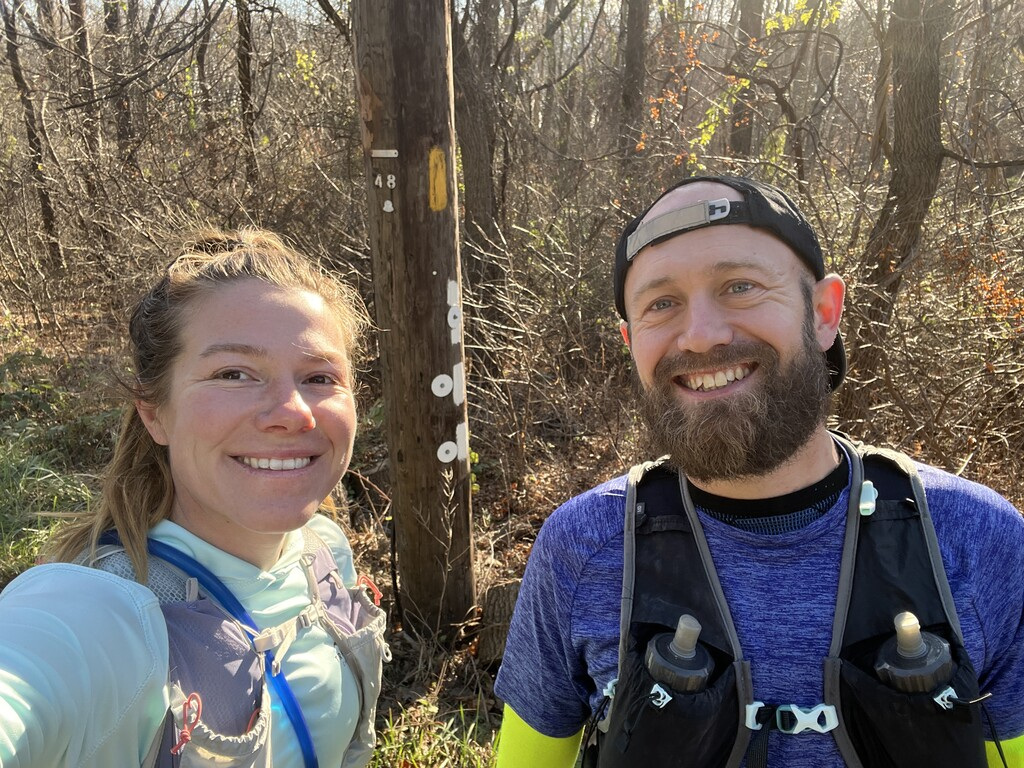

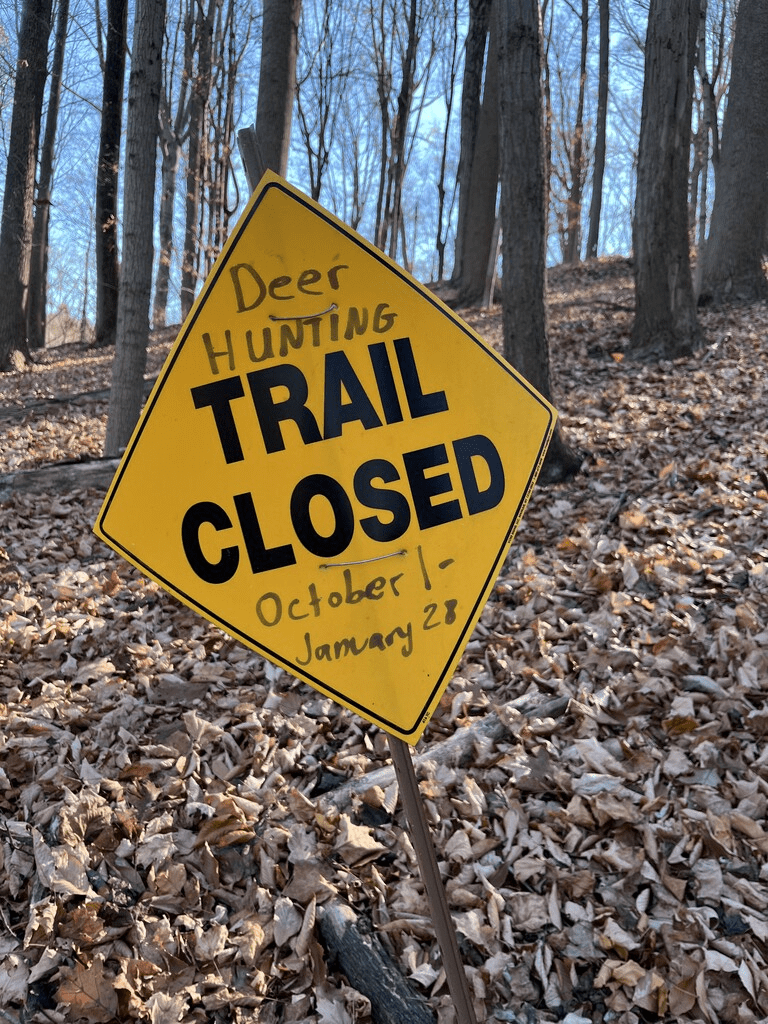

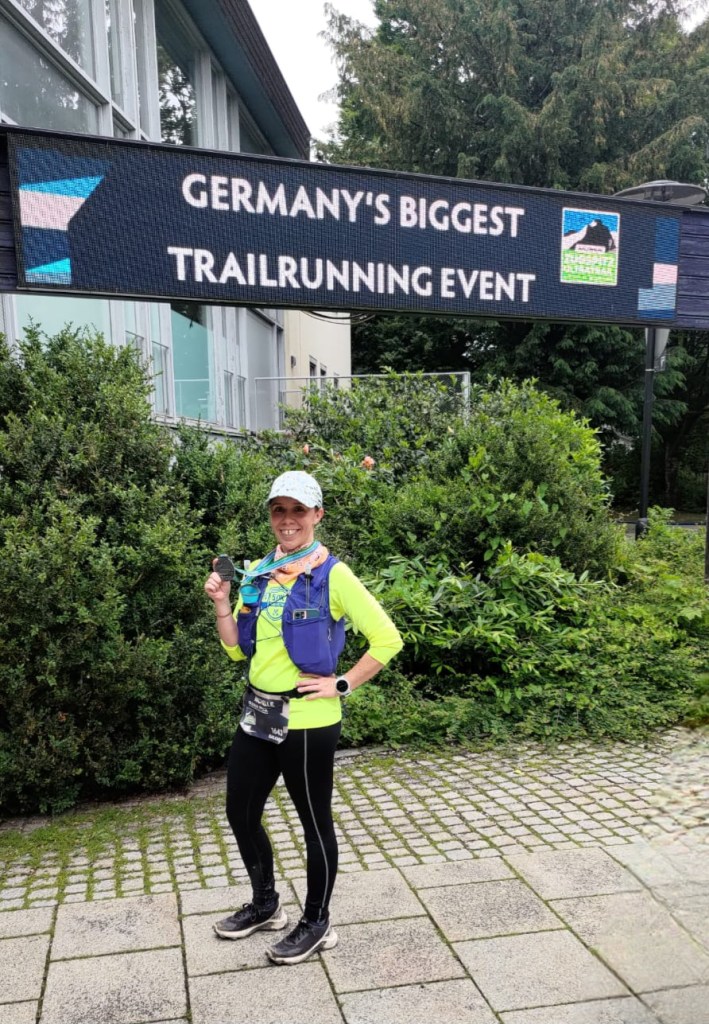

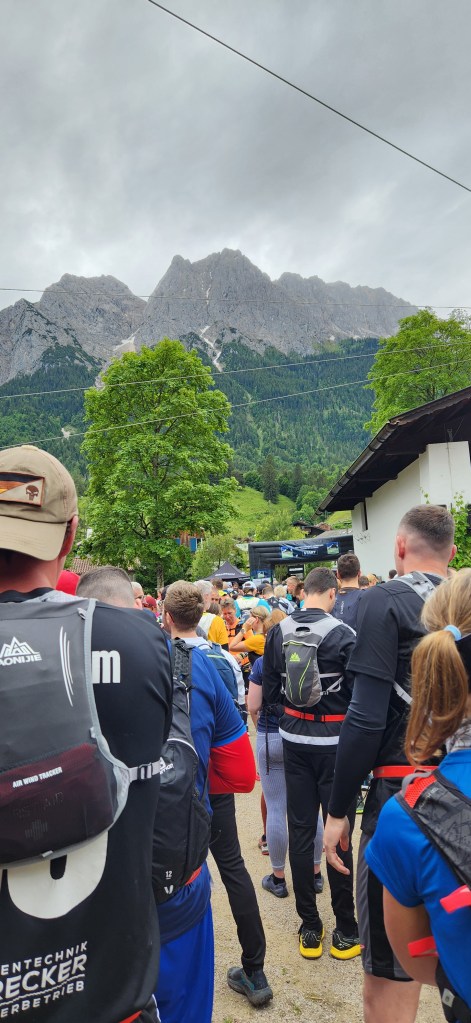

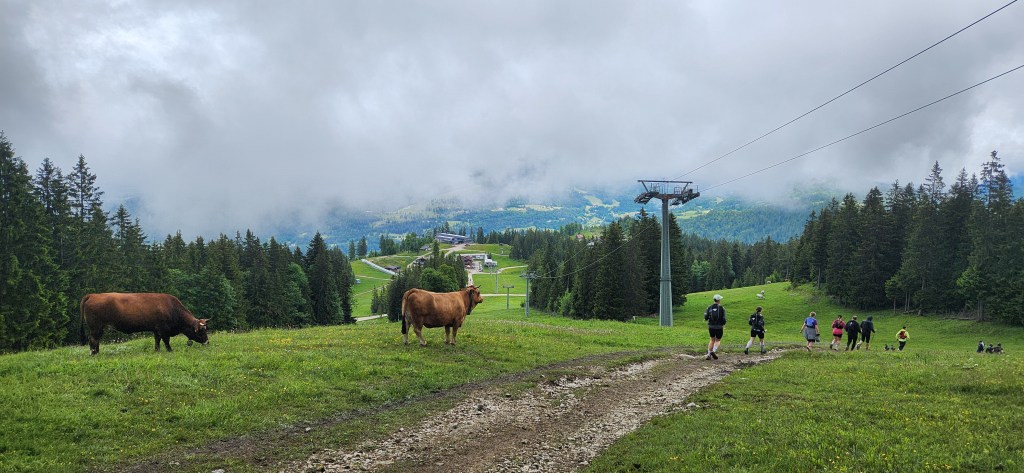
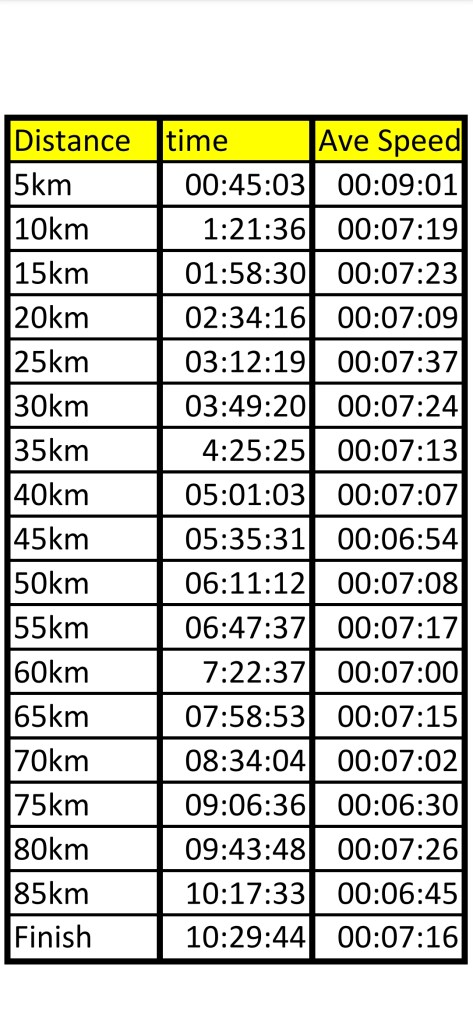
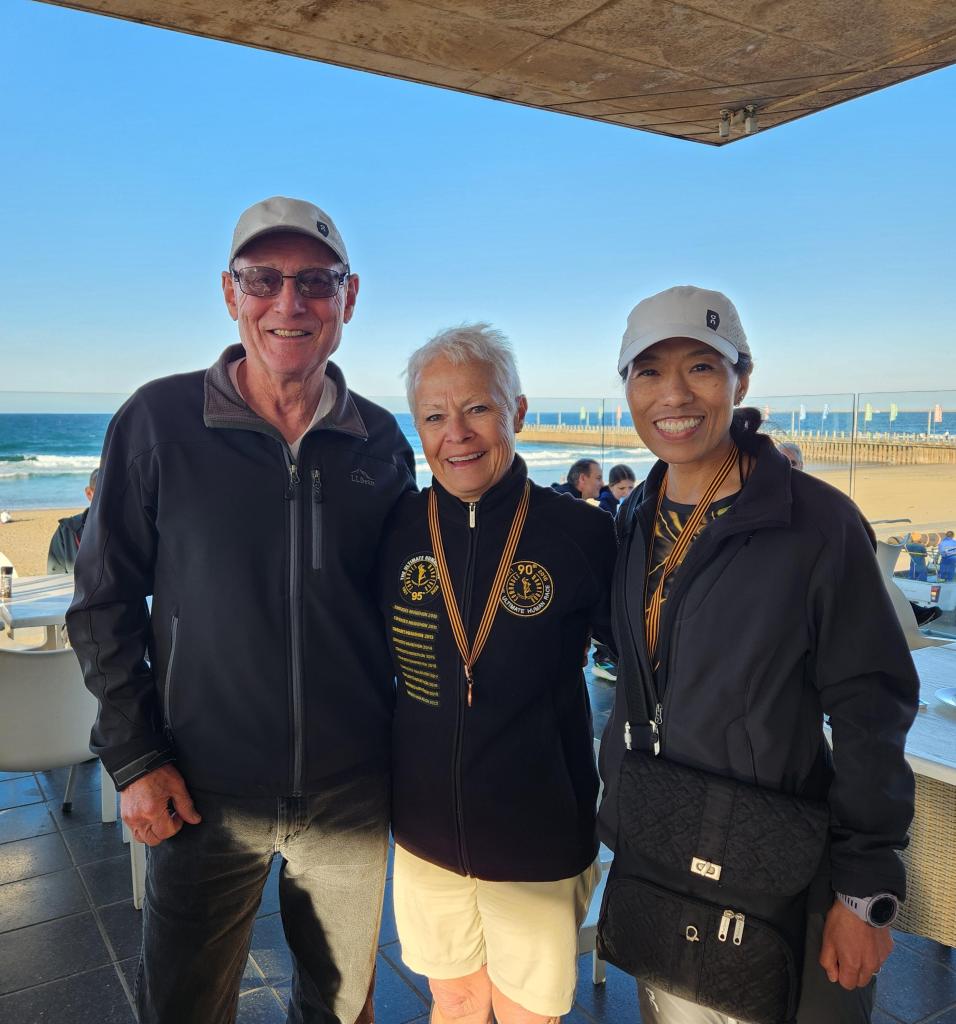


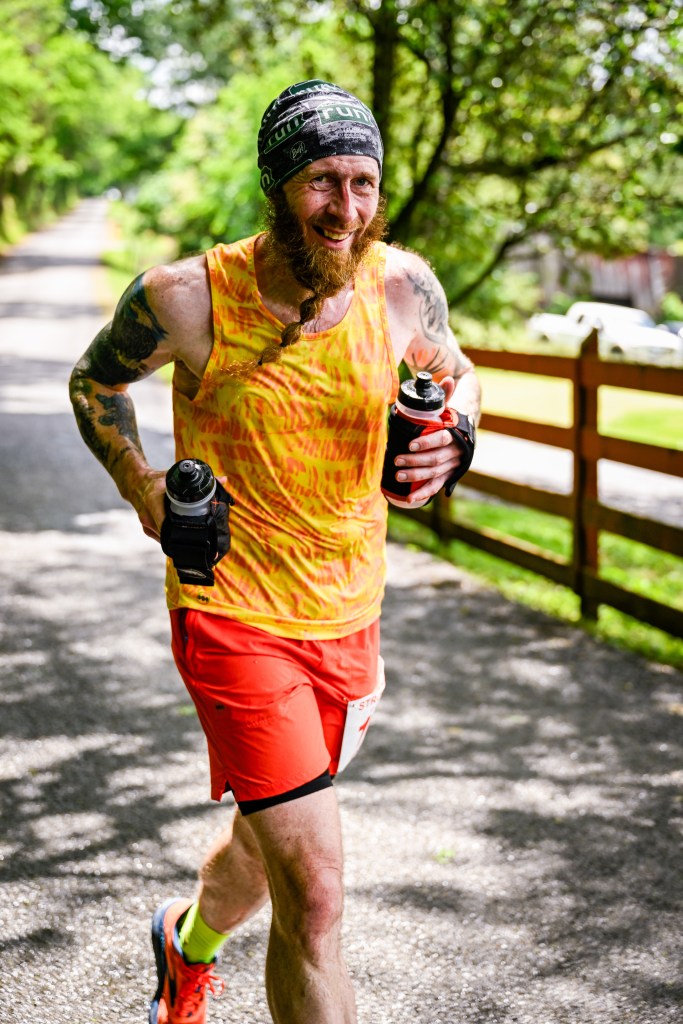
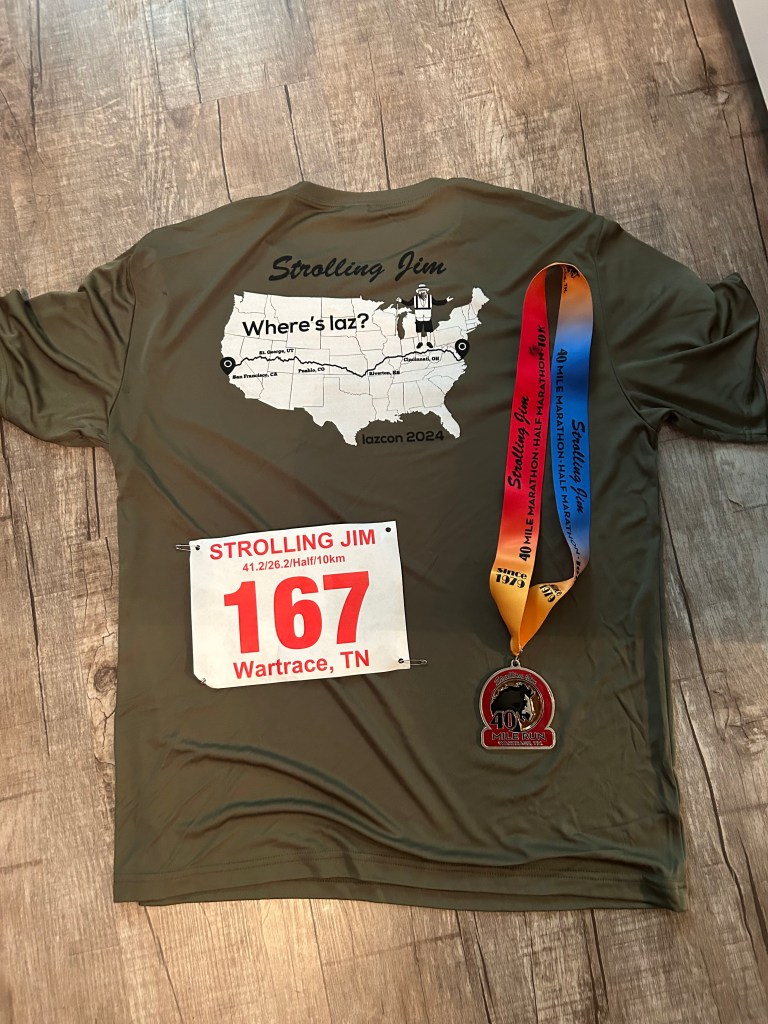
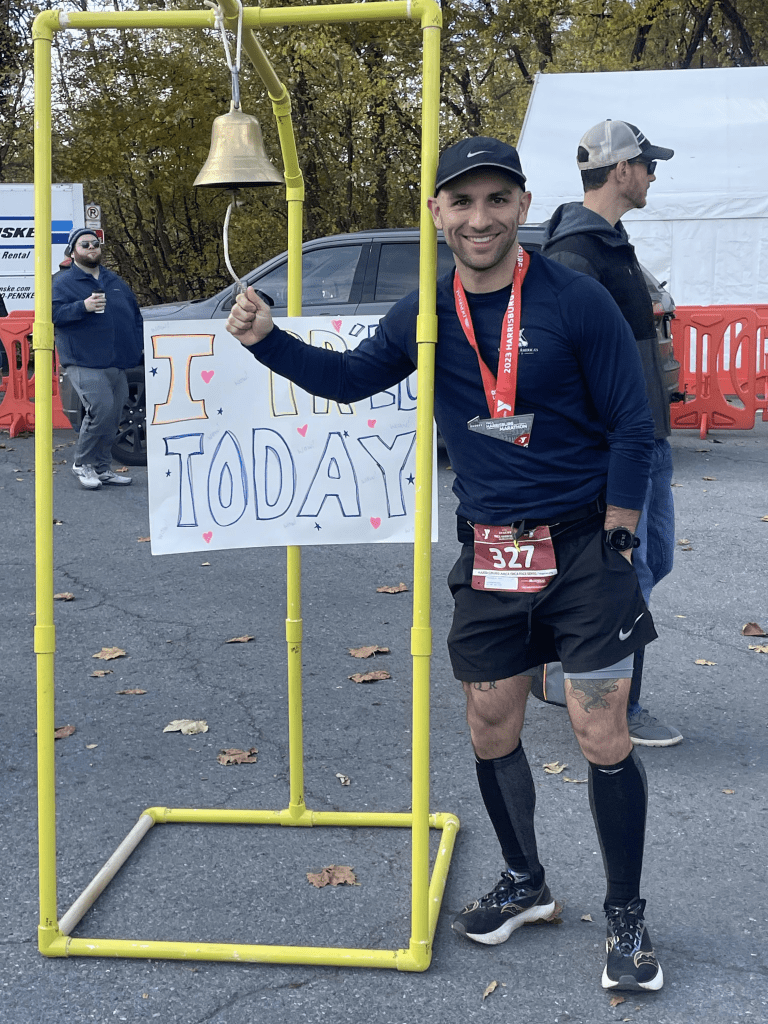

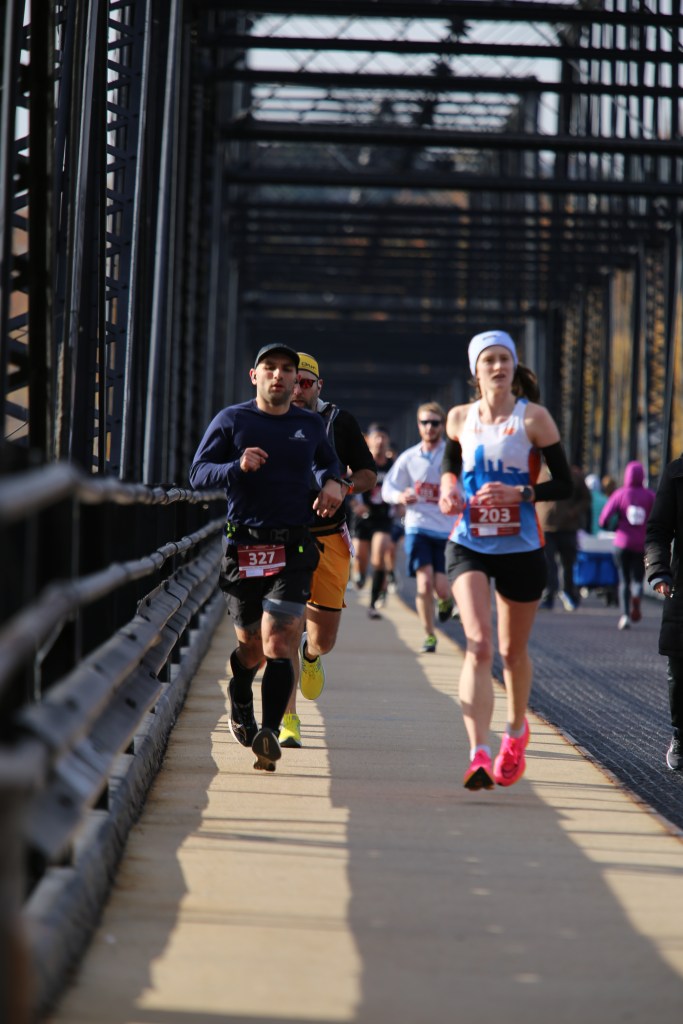


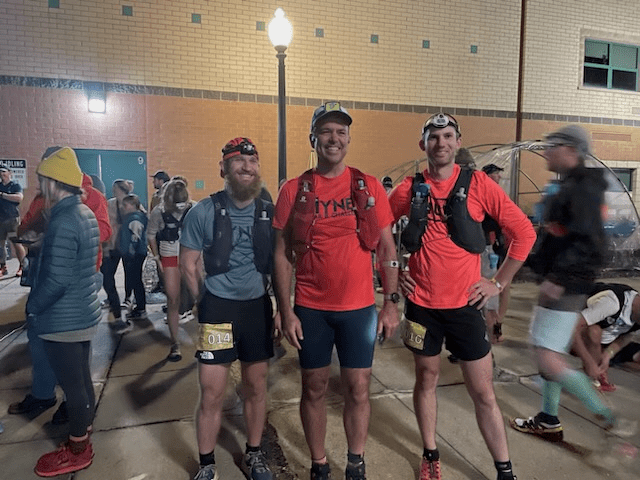

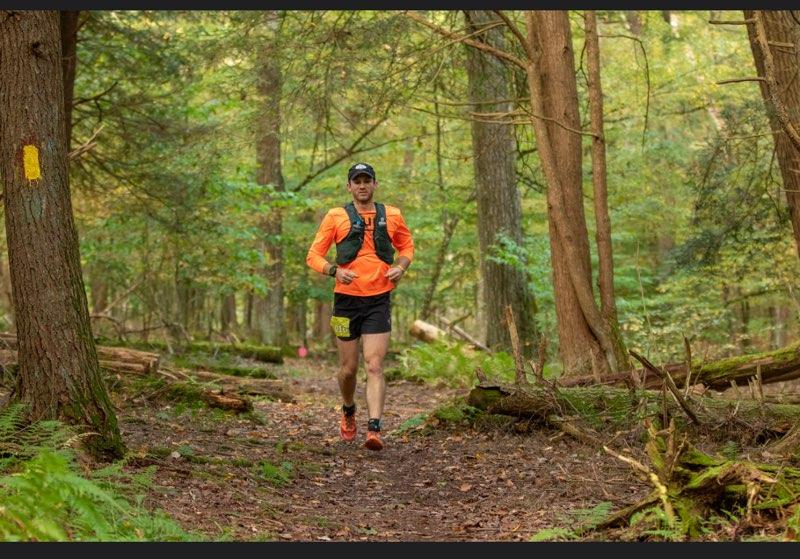

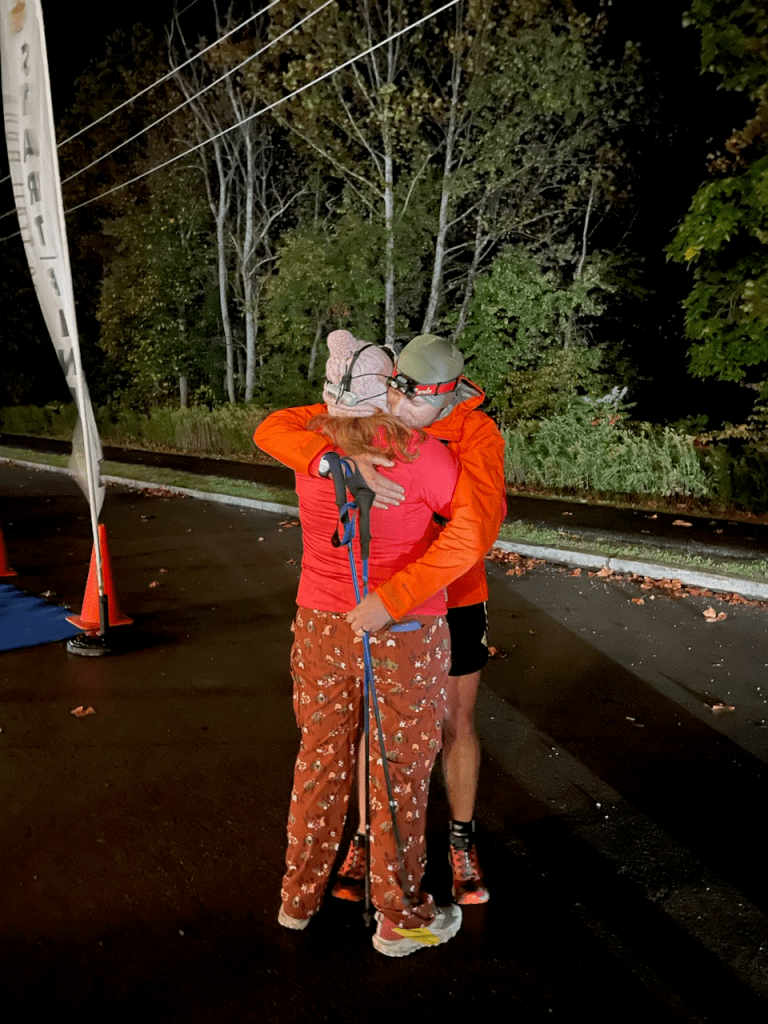

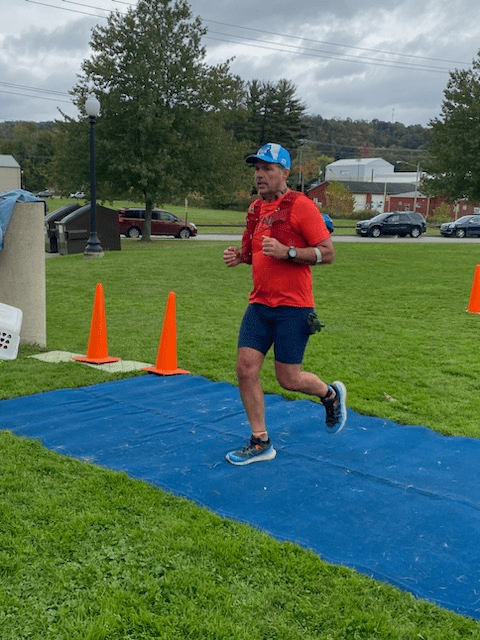
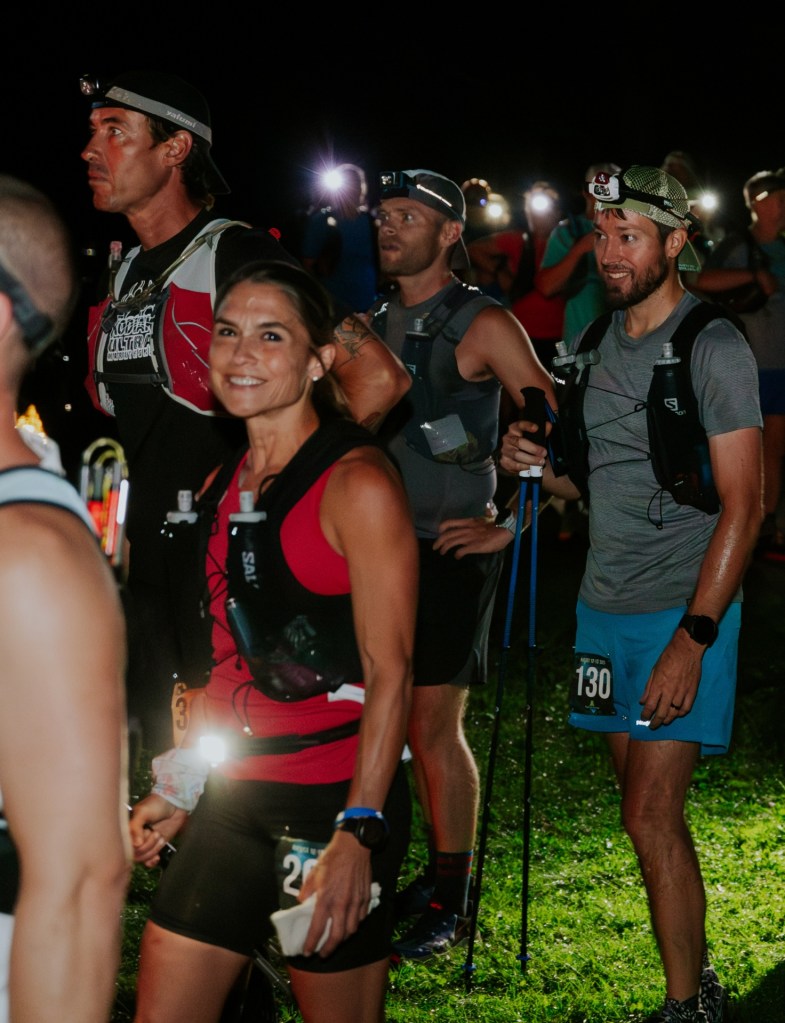
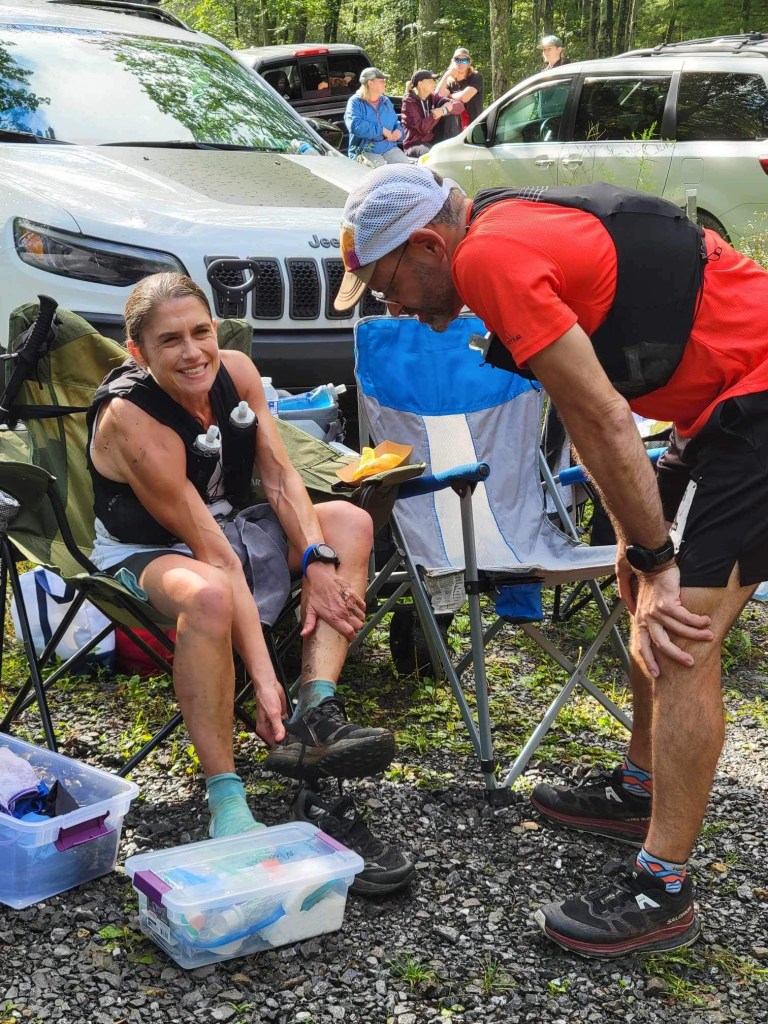
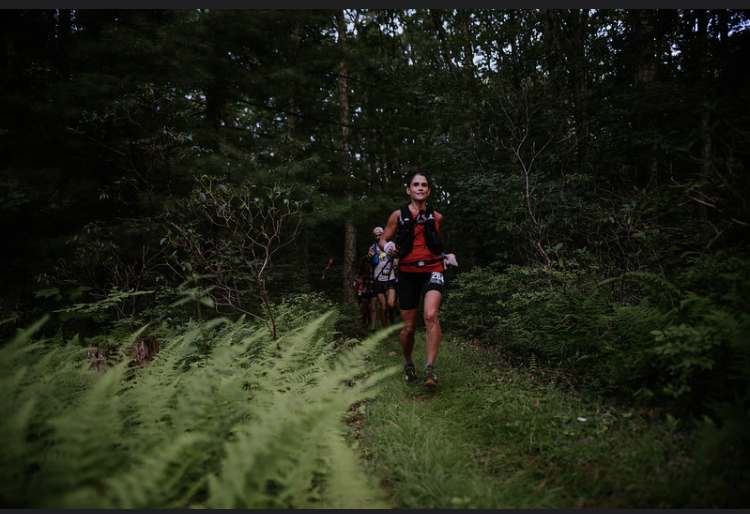
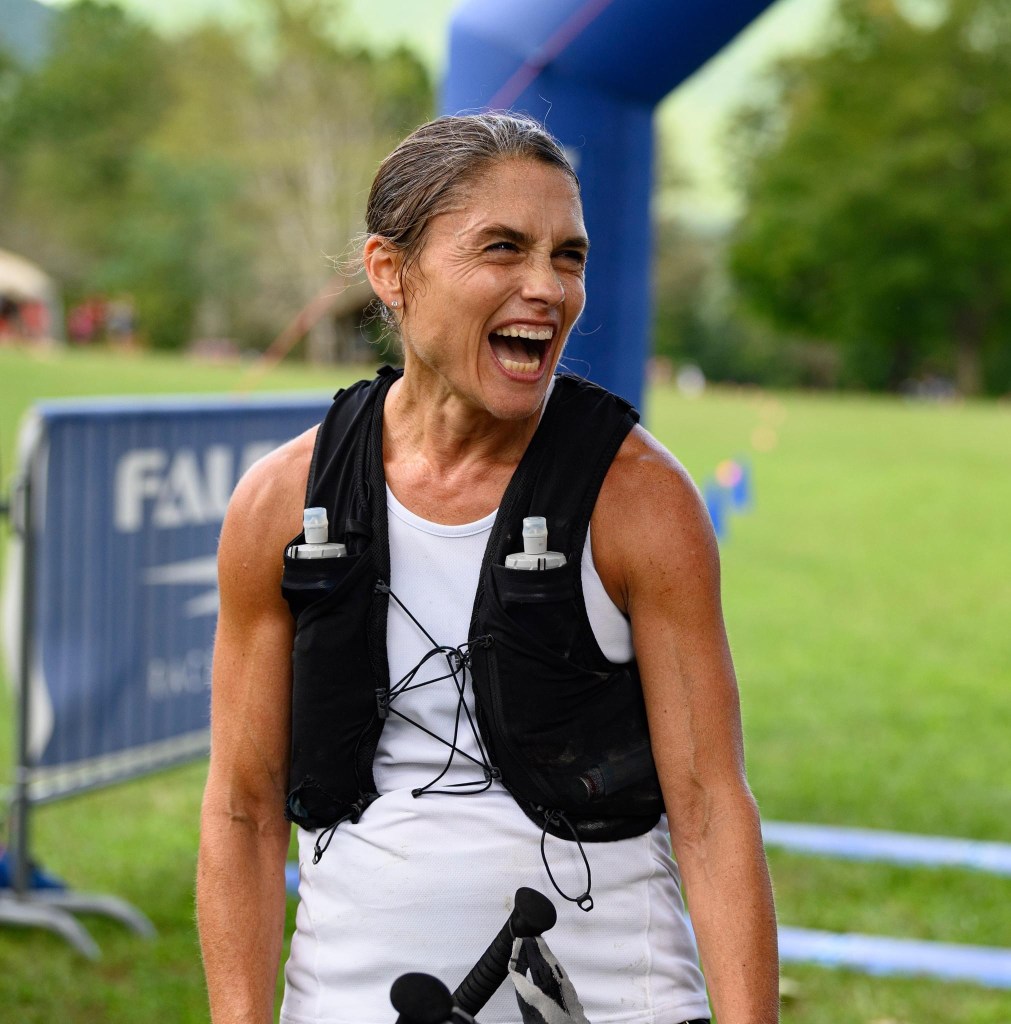

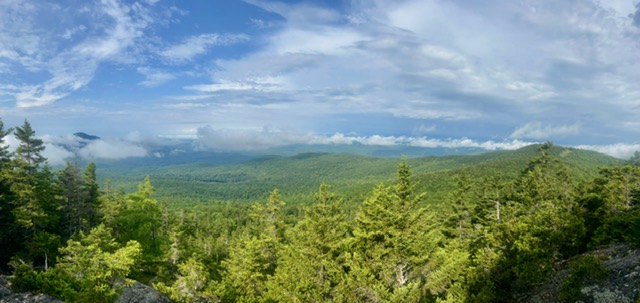
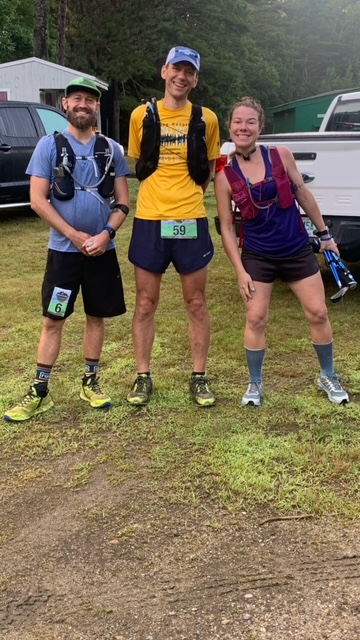
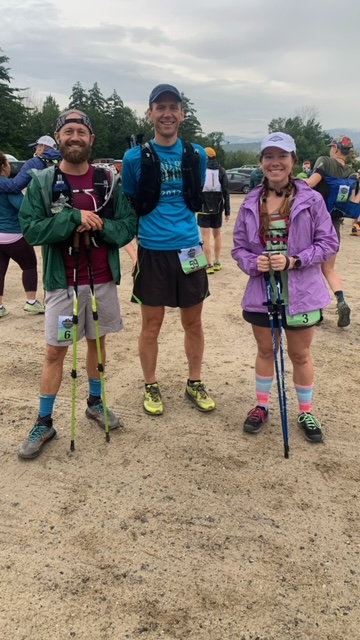
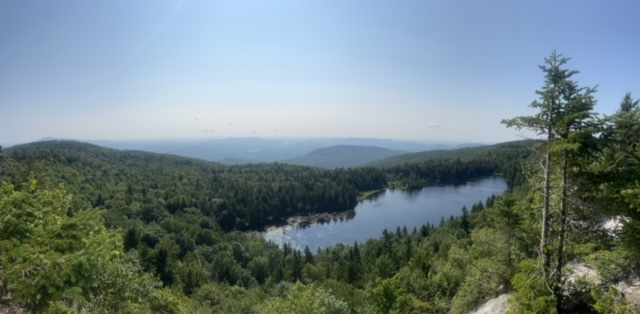


 Pagoda Pacers News