
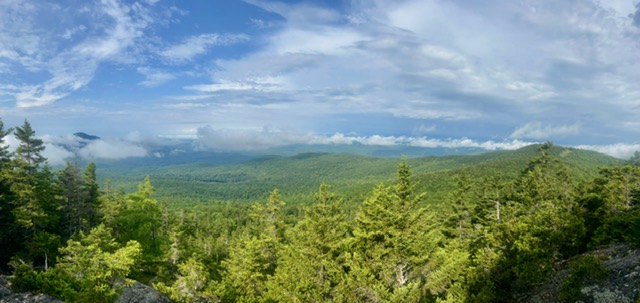
Editor: At the end of last year, while searching for fun events online, Kelly Ammon stumbled upon the Ragged 75 Stage Race in New Hampshire–a 3-day event in August that featured some serious climbs, camping, and a whole lot of fun on some New England trails. After spreading the word, she convinced a couple other Pacers to sign up as well. One of those Pacers was Steve Vida.
Vida: I love a themed run or an odd-format race. So when Kelly approached me last year at the Pacer Christmas Party and said she found an interesting 3-day stage race in New Hampshire, I signed up that same night.
The Ragged 75 Stage Race is over 75 miles with 15,500 ft of vert split across 3 days, making one big loop back to the starting point. At the end of each day, there is a defined location to camp overnight, and the race director carts your gear from one site to the next. There are a lot of logistics involved with putting on this race, and I thought the team at Six03 did everything needed to provide a great experience.
Editor: Brandon Beane was also intrigued by this unique event.
Beane: After signing up for it, past experiences cycled through my mind. 75 miles over 3 days seemed reasonable. I’d done 50 miles in a single day, so how bad could 75 in three days be? Then I also thought back to how achy and sore I’ve been the day after running just a 50k. No matter how much I justified my ability by my past experiences, I knew I was in for something new. Luckily, when Kelly started chatting about the race, she had been able to convince Steve to join in as well, so we’d all be suffering in good company.
Editor: How did the format make this race experience different?
Beane: This was the first race I had ever done that had equipment requirements prior to heading out on the course. The race director required all runners to have a raincoat, along with your phone, a map of the course, and a blister kit (I thought the blister kit was kind of silly having never used one). You also were required to camp where each leg ended, so you needed a tent and any other camping equipment you require that they would move for you each day to your next ending location.
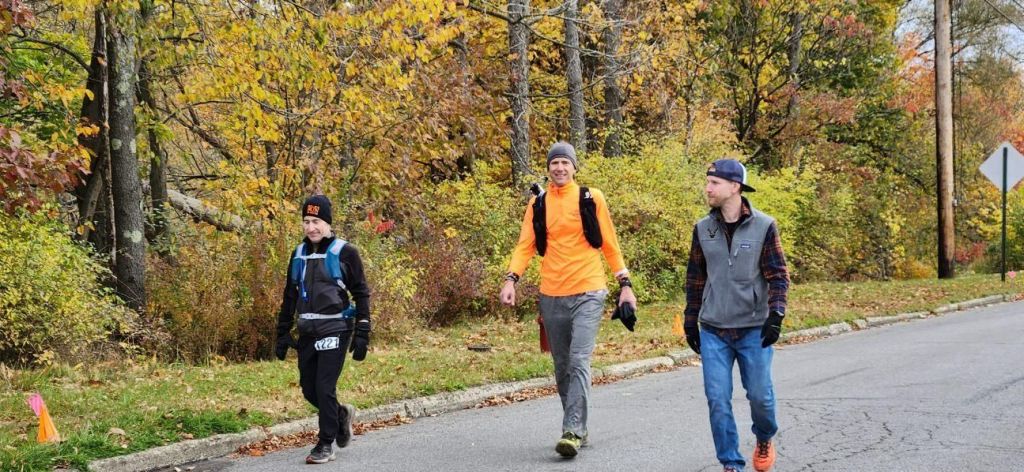
Vida: This race is best enjoyed as a group. I got to run the first few miles with Kelly and Brandon each morning as we eased into the day’s task, and we often crossed paths again later. Late in the day, I couldn’t wait to get back to camp to rehash how we did and strategize about the next segment. Because this format was new to all of us, we talked constantly about how to approach different aspects of the race. At the start of day 1, we were already worrying about day 2 and day 3 issues. This led Kelly to lay down the mantra: “We don’t talk about tomorrow.” We’ve got to put the shoulder to the wheel today.
Editor: What was the first day like?
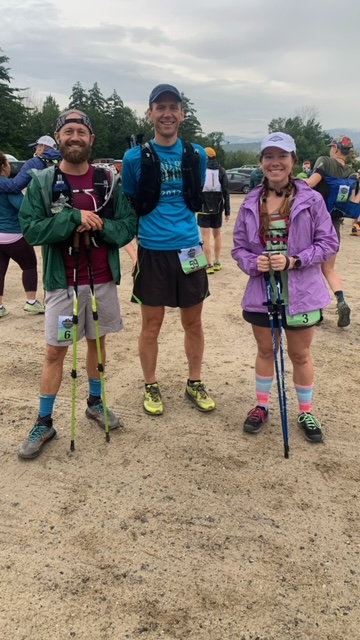
Vida: Day 1 had rain – some during the day and more overnight.
Beane: Thankfully it calmed down for the actual start of the race, although it did sprinkle a few more times throughout the rest of the day. Ironically, at the top of the first climb which was up Ragged Mountain, I felt a hot spot on the back of my heel and used my trusty blister kit (which really was a life saver and I will never go to a race without again). According to my watch, day 1 clocked in at 24.6 miles and 4967 ft of climbing. I had originally planned on going super easy on day 1 and 2, and then pushing day 3 if I had anything left in the tank, but after day 1 it was clear that I had already deviated from my plan and that day 2 and 3 were going to be sore and slow going.
Editor: How about day 2?
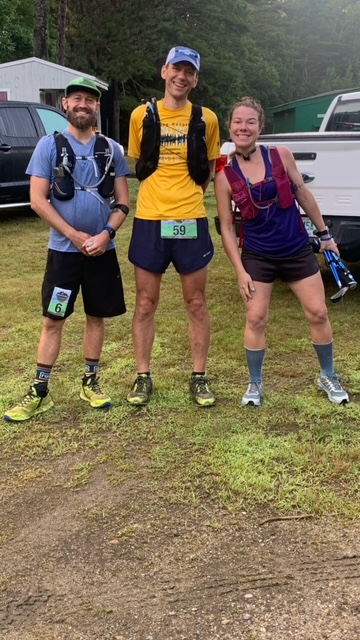
Vida: It was tough to start the second day by putting on shoes and a vest that were still wet from the day before. But you put them on … and you run. I usually have pre-race jitters, but here I was too busy packing up my tent and my gear and getting them on the truck. Before I knew it, we were snapping a Pacer group photo and heading down the road. We all anticipated soreness on day 2, but it wasn’t too bad once you got moving. What I did not anticipate was how much my calorie and hydration deficit would accumulate from one day to the next. I would give this more attention next time around.
Beane: Surprisingly day 2 didn’t feel awful, and only got more comfortable as the day went on and my muscles warmed up. The weather was ideal, no rain and nice mild temps. Day 2 according to my watch was 23.8 miles and 4245 ft of climbing. At the end of day 2, I continued with my post race stretching, my massage gun, and lots of lying around.
Editor: And what about the final day?
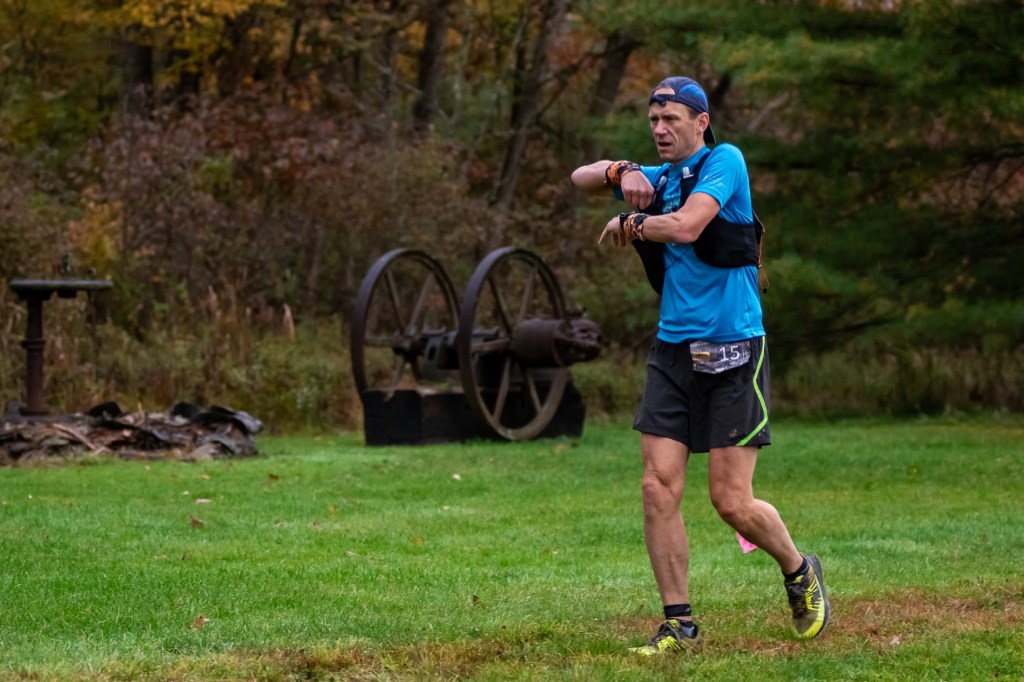
Beane: Day 3 was rough to start. The stretching and massaging the night prior wasn’t enough to counter the previous two days worth of miles, and day 3 was the longest leg with the most climbing. With a twelve hour cutoff, I felt confident I’d finish, but figured it would be a long day and set a goal for myself of 10-10.5 hours to finish. Similarly to day 2, I did start to loosen up some as the miles passed. Day 3 stats according to my watch were 34.08 miles with 6339 ft of climbing in 8h 42m. Post-race festivities were music, food, and beer!!
Editor: How would you characterize the terrain of the course? And the scenery?
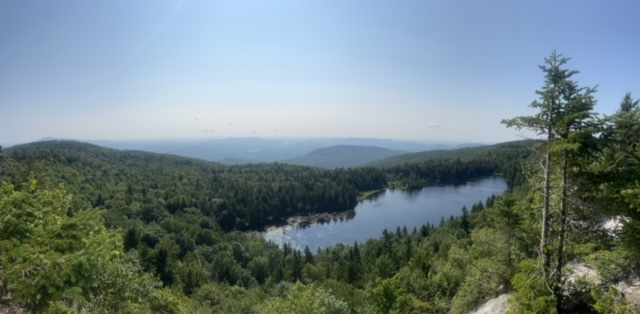
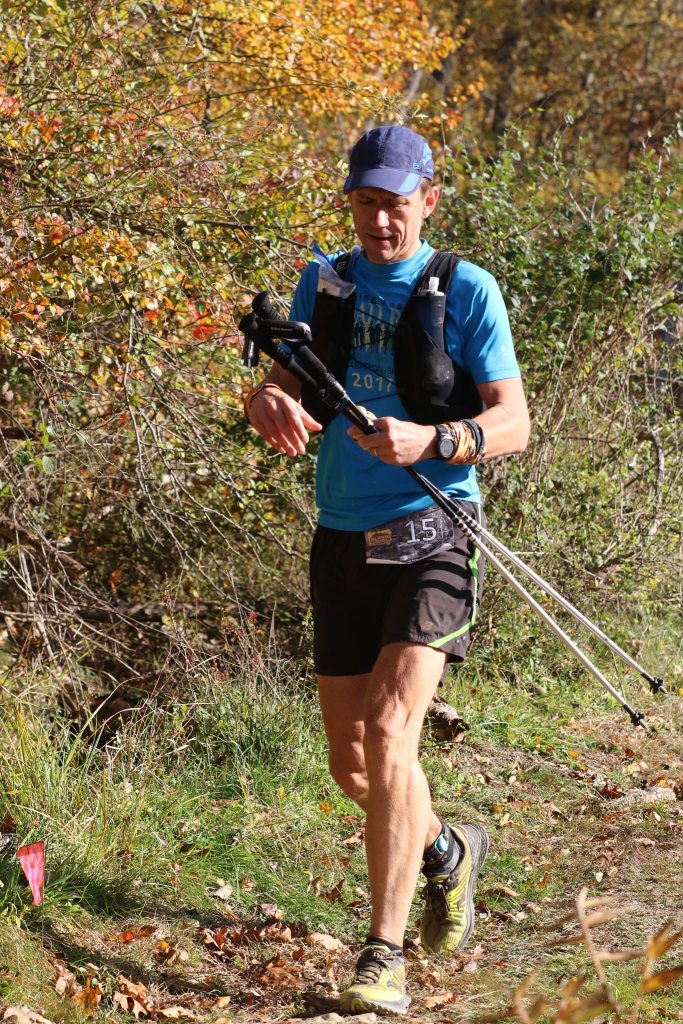
Vida: The course had a lot of variety. Every day included a few miles of road, but also at least one peak with some climbs that weren’t runnable (by me) on the way up or the way down. Poles were helpful. There were some great views. Some parts felt just like Pennsylvania forest, and others felt a little foreign. It’s not an easy course, but we had 12 hours to complete each day’s segment. We did hear comments that some years have brutal summer temperatures and humidity, but this year was pretty mild. It still took me 9.5 hours for the last day’s 33 miles.
Editor: Overall, would you recommend this event to other Pacers?
Vida: I’d recommend this race to most people–unless you already hate camping. I wanted to find out if my 53-year-old body could run for 7 hours, sleep on the ground, and then get up and do it all again (and yet again). As of 2023, the answer is still “yes.”

Beane: All said and done, the Ragged 75 was an amazing experience. The course was beautiful, the organizers and volunteers were amazing, and it was great to spend time and hear stories from like-minded people who were enduring the same miles, climbs, descents, bee stings, aches, and pains as yourself. Would I do it again? Absolutely. Who’s coming with me?


 Pagoda Pacers News