Wellness Corner: Stress 101—Health Risks of Unmanaged Chronic Stress

by Andrea Thrush

Disclaimer: I am not a medical professional, and this information is for educational and informational purposes only. Reading this article does not create a coach-client relationship, and you have full personal responsibility for your health and wellness. Please seek professional medical or psychological help if you have any concerns or issues.

Knowing the health effects of chronic stress can be an important first step in the process of managing it. There are many additional factors that can lead to the health issues listed here (nutrition, exercise, type A personality, etc.), but being aware of the role stress plays can be helpful. It is important to note that stress alone does not cause these health problems; it is just a small piece of the puzzle, but one that we can manage in order to help improve our health.

Ongoing chronic stress that is not managed can increase the risk of:

  • Cholesterol (LDL, also known as the “bad” cholesterol) levels can increase, leading to increased risk of heart disease or stroke because the cholesterol sticks to the walls of the blood vessels and can block blood flow (Greenberg, 2025, chapter 3). This is from stress hormones that unlock fats and triglycerides, while chronic low-grade inflammation is elevated (Harvard Health, 2024). Even something so “simple” as a football team losing the Super Bowl was found to influence the increased rates of death from heart attacks and heart disease (Greenberg, 2025).
  • Hypertension (Greenberg, 2025, chapter 3). This is partly a result of when the body releases vasopressin and oxytocin as a part of the stress response (Greenberg, 2025, chapter 2). These two hormones together can result in higher blood pressure. In addition, relaxation techniques can help increase nitric oxide levels in our bodies, which can help reduce blood pressure and help improve our mood (Harvard Health, 2024).
  • Stroke due to higher cholesterol levels affecting the blood vessels blocking blood flow to the brain (Greenberg, 2025, chapter 3).
  • Coronary Heart Disease from higher cholesterol levels affecting the blood flow to the heart (Greenberg, 2025, chapter 3). Heart disease programs that include stress management have been found to decrease death rates, reduced hospitalization rates (for heart problems), and improved heart function (Harvard Health, 2024).
  • Ulcers (Greenberg, 2025, chapter 3) and irritable bowel syndrome (Greenberg, 2025, chapter 2). One theory about stress’s role in ulcers is that the bacteria known to cause the majority of ulcers (Helicobacter pylori) irritate the lining of the stomach and may also increase the acid in the stomach, leading to ulcers (Greenberg, 2025, chapter 3).
  • Migraine headaches because of increased blood flow to the head during times of stress, although lifestyle as a whole should be addressed for this condition (Greenberg, 2025, chapter 3).
  • Tension headaches due to muscle tension when stressed (Greenberg, 2025, chapter 3)
  • Cancer: While research in this area is ongoing and there are several causes of cancer, T-lymphocytes help fight cancer cells, and they decrease in number during stress (Greenberg, 2025, chapter 3). Simply put, chronic stress can hurt our immune systems, which can hurt our bodies’ abilities to respond to cancer cells (Harvard Health, 2024).
  • Allergies, asthma, and hay fever: T-lymphocytes also help deal with the antigens that enter the body that kick allergies and asthma in, and due to their reduction in times of stress, the body’s ability to handle these antigens declines (Greenberg, 2025, chapter 3).
  • Rheumatoid Arthritis: Flare-ups often seem to come after stressful times (Greenberg, 2025, chapter 3).
  • Decreased immune system function, due to the fact that stress can decrease your white blood cells, which your body needs to help fight viruses (Greenberg, 2025, chapter 3). Several studies have found lower levels of antibodies during stressful times (Greenberg, 2025, chapter 3). This affects everything from our chances of catching a common cold to the influence of developing cancer (Greenberg, 2025).
  • Backaches are common due to muscle tension from stress or muscle weakness (Greenberg, 2025, chapter 3).
  • Sports injuries are also more likely to occur after stressful times (Greenberg, 2025, chapter 3).
  • Diabetes: It has been found that diabetes is not caused by stress, though stress can make it more difficult to handle this condition (Harvard Health, 2024).

There is a light at the end of the tunnel—remember that stress is only one piece of the puzzle in these health conditions. Next month we will get into methods of coping and managing stress in order to help improve our moods and health outcomes!

References

Greenberg, J. S. (2025). Comprehensive stress management (2025 Release). McGraw Hill.

Harvard Health. (2024). Stress Management—Special Health Report. Harvard University.
Wellness Corner: Stress 101

The winter holiday season always seems to creep up very quickly at this time of the year and brings with it additional daily stressors for many people. It seems like good timing to have a stress article series, starting with some basics this month and building from there, including how it affects our health and ways to cope and manage (including some that may surprise you, such as nutrition). 

Disclaimer: I am not a medical professional, and this information is for educational and informational purposes only. Reading this article does not create a coach-client relationship, and you have full personal responsibility for your health and wellness. Please seek professional medical or psychological help if you have any concerns or issues.

Did you know?

  • Between 60% and 90% of doctor’s visits are related to stress (Powers & Dodd, 2020; Harvard University, n.d.). 
  • Back in 2010, the American Psychological Association said stress is becoming a public health crisis (American Psychological Association, 2011).
  • In the American Psychological Association’s “Stress in America 2025” report, top stressors include the future of our nation, the economy, work, spread of misinformation, money, U.S. Politics, housing costs, relationships, and the rise of AI (APA, 2025). 
  • Stress can lead to poor health or make current chronic health diseases worse (National Board for Health and Wellness Coaching, 2022).

The Basics:

  • Stress can be good for us, helping us do better with certain things. Examples include studying for a test you are stressed about or preparing for a public speech (Greenberg, 2025, chapter 1). We need just a bit of stress in our lives.
  • Physical and emotional symptoms of stress can include “irritability or anger; fatigue; lack of interest, motivation, or energy; feeling nervous or anxious; headache; feeling depressed or sad; feeling as though you could cry; upset stomach or indigestion; muscular tension; change in appetite; teeth grinding; tightness in chest; feeling faint or dizzy; change in menstrual cycle; etc. (American Psychological Association, 2011; McCarthy, et al., 2016; Greenberg, 2025, chapter 1). Other symptoms can include racing heart or palpitations, sweating, ringing in ears, frequent/urgent need to pee; restlessness; fidgeting; overuse of alcohol; emotional eating/overeating; clenching your fists; smoking more than usual; withdraw from others (wanting to be alone); boredom; worry; poor concentration; trouble with memory; loss of sense of humor; etc. (Harvard Medical School, 2024). Knowing and being aware of these symptoms can be helpful for successful stress management. 
  • Some stressors can be subjective (or symbolic), based on a person’s attitudes, personality, culture, environment, outlook on life, etc. (Greenberg, 2025). What stresses you out may not stress someone else out. Regardless, our bodies all respond the same (such as elevated heart rate and respiration rate, muscle tension, and blood pressure) (Greenberg, 2025, chapter 1). 

References

American Psychological Association. (2011). Stressed in America. Monitor on Psychology. 

American Psychological Association (2025). Stress in America™ 2025: A Crisis of Connection. https://www.apa.org/pubs/reports/stress-in-america/2025/full-report.pdf#:~:text=The%202025%20Stress%20in%20America%E2%84%A2,among%203%2C199%20adults%20ages%2018%2B

Greenberg, J. S. (2025). Comprehensive stress management (2025 Release). McGraw Hill. 

Harvard Medical School (2024). Stress Management: Special Health Report. 

McCarthy, C. J., DeLisi, M., Getzfeld, A. R., McCarthy, C. J., Moss-King, D. A., Mossler, R., Privitera, G. J., Spence, C., Walker, J. D., Weinberg, R. S., & Youssef-Morgan, C. M. (2016). Introduction to applied behavioral science. Bridgepoint Education. 

National Board for Health and Wellness Coaching. (2022). NBHWC Content Outline: 2026 – 2030. https://nbhwc.org/wp-content/uploads/2026/09/ADA-NBHWC-Content-Outline-2026-2030-2-2.pdf 

Powers, S. K., & Dodd, S. L. (2020). Total fitness and wellness (8th ed.). https://redshelf.com 

Wellness Corner: Hydration

by Andrea Thrush

It’s that time of the year where we will start seeing increasing temperatures and humidity. Regardless of current level of fitness, it is important to make sure we stay hydrated. This article is set up in sections, so it is easy for you to find the subtopics that apply the most to you and your situation/needs.

The basics

Did you know:

  • about 2/3 of your body weight is water (National Institutes of Health, 2023).
  • One study found a link between dehydration and the development of chronic diseases in middle-aged people (National Institutes of Health, 2023).

Proper hydration affects…

  • most of our body’s day-to-day functions (USATF, 2015)
  • athletic performance (USATF, 2015)
  • our overall health (CDC, 2024)
  • our athletic recovery (United States Olympic Committee Sports Dietitians, 2011).
  • our mood (CDC, 2024).
  • our ability to think clearly (CDC, 2024).
  • our chances of developing kidney stones and constipation (CDC, 2024)
  • The USATF (2015) claims that just a 1% decrease in hydration levels can lead up to a 6% reduced athletic performance.

How much water?

According to the CDC and the USATF, plain water (versus sports/electrolyte drinks) is all that is needed to maintain hydration levels, as long as we are eating normal meals.

The “eight cups a day” rule many of us learned is not accurate, because the amount any one of us needs can vary based on many factors, such as the weather for that day, what we eat, our weight, if we are traveling by plane, etc. Try to ensure you drink smaller amounts throughout the day (CDC), and increase the amount on hot, humid, or dry days, as well as on windy days (USATF, 2015).

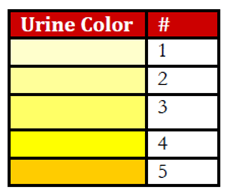
The USATF (and other sources) claim that the “pee test” is the easiest way to see what our hydration status is (look at the color of your pee). They also note that some medications and B-complex vitamins can make your pee darker than it might normally be.

Image source: United States Olympic Committee Sports Dietitians. (2011). The goal is to be between 1 and 3.

Dangers: While drinking too little water can be dangerous, drinking too much at once can be dangerous as well (USATF, 2015). The CDC recommends that no one drink more than 48 oz (1½ quarts) per hour to avoid medical issues from drinking too much of ANY fluids (this includes sports drinks). This is due to salt levels in our blood becoming too low (CDC).

Drinking alcohol can lead to dehydration, and increase the chances of heat illness for 24 hours after drinking it (CDC) See below for information on heat stroke and heat exhaustion, which can happen at anytime (not just while exercising).

Signs of dehydration (according to the United States Olympic Committee Sports Dietitians):

  • Lack of concentration
  • Early fatigue
  • High perceived exertion in training
  • Trouble tolerating heat
  • Delayed recovery
  • Muscle cramps
  • Loss of body weight exceeding 3% of normal body weight (post-exercise)

Electrolytes: (calcium, potassium, phosphorus, chloride, magnesium, etc.)

We lose sodium and potassium the most when we sweat, so if you are exercising for long amounts of time, or in heat, consider replenishing electrolytes. Otherwise, it is likely not needed, and water should suffice (CDC, 2015).

You can play around and make your own:

Plain coconut water has sodium and potassium, as well as carbohydrates (check nutrition labels for varying amounts between brands).

OR

2 cups water, 2t sugar, 1/8 t salt, and a splash of fruit juice (Larson, 2016).

Take action: tips for increasing water intake

  • Carry a reusable water bottle with you (CDC, 2026).
  • Freeze water in freezer-safe bottles for ice-cold water all day (CDC, 2026).
  • Choose water over sugary drinks (CDC, 2026).
  • Opt for water when eating out (CDC, 2026).
  • Serve water during meals (CDC, 2026).
  • Add a wedge of lime or lemon to your water (CDC, 2026).
  • Try healthier beverage options, such as black coffee, plain tea, sparkling water (my son adds a touch of 100% juice to his), or flavored water (CDC, 2026).
  • You can set alarms as reminders (Mayo Clinic, 2023).
  • You can use a bottle that tracks your intake, so you can track your progress (Mayo Clinic, 2023). You could always just use paper and pencil to track progress, or an app. Some Garmin models have a feature where you can add your water intake on the screen of the watch. If getting enough water is a struggle, tracking progress can be motivating.
  • Make drinking water a part of your routine. This can include times such as when you first wake up, when you eat your meals, brush your teeth, or even when you use the bathroom (Mayo Clinic, 2023).
  • Make it social – challenge a friend, coworker, family member, etc. (Mayo Clinic, 2023).

Heat related illnesses

Heat Exhaustion

This happens when the body loses too much water and salt (CDC, 2026). According to the CDC, symptoms include:

  • Headache
  • Nausea
  • Dizziness
  • Weakness
  • Irritability
  • Thirst
  • Heavy sweating
  • Elevated body temperature
  • Decreased urine output

Heat Stroke

This is worse than heat exhaustion, and the body can no longer control its temperature (CDC, 2026). According to the CDC, symptoms include:

  • Confusion, altered mental status, slurred speech
  • Loss of consciousness (coma)
  • Hot, dry skin or profuse sweating
  • Seizures
  • Very high body temperature
  • Fatal if treatment delayed

If you or someone you are with experience either heat exhaustion or heat stroke, call 911. Get them out of the heat and into shade or AC. Help them drink some water, and try to help cool their body down by removing unnecessary clothing/layers (including shoes and socks), wetting their skin and clothes, and get air circulating if possible.

References/for more information:

(1) Centers for Disease Control. (n.d.) Heat Stress: Hydration. https://www.cdc.gov/niosh/mining/UserFiles/works/products/training/keepingcool/2017-126_hydration.pdf

(2) United States Track and Field. (2015). Track & Field Coaching Essentials: USA Track & Field Level 1 Coach Education Manual.

(3) United States Olympic Committee Sports Dietitians. (2011). Sports Nutrition – Fluid for Athletes. (provided by USATF Level 1 Coaching Credential program).

(4) US Centers for Disease Control and Prevention. (2026). Heat-related Illnesses. https://www.cdc.gov/niosh/heat-stress/about/illnesses.html

(5) US Centers for Disease Control and Prevention. (2024). Fast Facts: Data on Water Consumption. https://www.cdc.gov/nutrition/php/data-research/fast-facts-water-consumption.html

(6) Larson, A. (2016). Fuel For Sport: The Basics (Exercise Science Collection).

(7) Centers for Disease Control and Prevention. (2026). About Water and Healthier Drinks. https://www.cdc.gov/healthy-weight-growth/water-healthy-drinks/index.html

(8) National Institutes of Health. (2023). Hydrating for Health: Why Drinking Water Is So Important. https://newsinhealth.nih.gov/2023/05/hydrating-health

(9) Mayo Clinic. (2023). Tips for drinking more water. https://www.mayoclinichealthsystem.org/hometown-health/speaking-of-health/tips-for-drinking-more-water

Letter from the President (July 2019)

Up until a few days ago I thought I’d be writing about volunteers, upcoming races, and looking forward to seeing Matt Brophy’s touch on his first Pacer Newsletter as editor.

If you’ve been current with the Pagoda Pacers Discussion Group on Facebook, you are probably aware of what has been a tumultuous July. One of my experiences in my youth was being a pallbearer for an uncle. For me, the scrawny high school kid, he was a large man both in stature, but also in how he carried himself. He looked like Lee Marvin in The Dirty Dozen. He was a factory worker–a machinist. He was also an athlete. However, his time of youthful athleticism was taken by WWII. He never spoke of his wartime experience, which I believe for him and many others was a coping mechanism.   

Grabbing that brass rail was a first for me. Carrying that casket may have been one of the most formative points of my youth. The strain of the weight while I looked down upon the flag draped in front of me left an impression that remains with my soul. I’ve told many a person being a pallbearer is an important life experience. 

Now, as a club, we mourn the loss of James Cramer, and as I thought of touching on this point in the Newsletter, something hit me. You see my experience of carrying that casket was not singular; there were others. I did not bear that weight alone. My heart goes out to Jim’s family and close friends. My utmost respect and admiration go out to the family of trail runners that made multiple trips to the AT looking for a friend. Share the good stories of Jim, and remind everyone we need not bear this weight alone.

The weather has been brutal the last few weeks. Between the rain and heat, it’s a wonder anyone has had enough motivation to change the calendar, let alone run. I think typically August is supposed to be the hot month, so if you’re training for something, find a buddy and a really early start time. Mike Whalen posted some good hints a few weeks back on the Discussion group on “hyper-hydration” and managing water intake during the heat.  Well worth reaching out to Mike if you have questions. 

As I noted in prior months, the Charlie Horse race was very successful, and we were fortunate to present a check for $3,400 to the Special Olympics and meet a few of their athletes at our July meeting.   A similar motion was approved to present to the “Friends of Nolde” our 50/50ish split from the Run for the Ages. Up next is the Grings Mill 5k and 10k. 

Yep, as you read this we’re soliciting for volunteers and runners for Sunday August 4th at the Berks County Heritage Center. Spend a little time with friends and fellow Pacers at possibly one of Berks’ oldest continuous running races. The work of many lightens the load. See you on Sunday. 

Steve